How to Mix Furniture Styles Like a Designer: 7 Rules That Actually Work
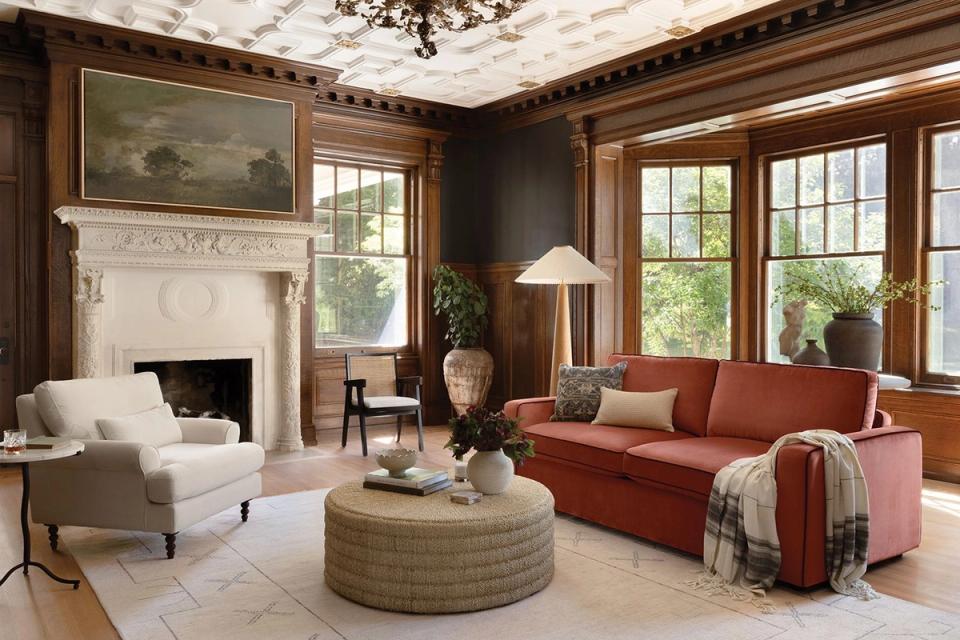
If you've been on interior design Instagram lately, you've already seen the look, even if no one's named it for you. A vintage cane Pierre Jeanneret chair next to a sleek marble coffee table. A reclaimed wood stool under a curved CB2 sofa. A traditional console paired with a sculptural, modern chair. The pieces shouldn't work together—but that's exactly why they do.
A mix of furniture styles is now a standard move in warm minimalist and Scandinavian interiors, and the reason is simple: an all-matching space reads as a showroom. A room with one strong silhouette from three different eras reads as a home that's been lived in.
But mixing furniture styles is also where most DIY decorators get stuck. Without a system, the pieces fight each other instead of building a room. Here, Havenly lead designer Melissa Wagner shares the rules she and her team use to make assorted items feel deliberate.
1. Repeat at least one element across the room
Every successful mixed-furniture-style room has at least one binding thread. Without it, the pieces feel like they ended up in the same room by accident.
Pick a color, finish, material, or pattern, and repeat it two to three times across the space. Carry cobalt blue accents throughout. Combine bleached rattan pendants and side tables. Add multiple milk glass lamps. Incorporate a few striped fabrics with upholstery, throw pillows, and curtains.
The eye reads the repetition before it reads the variety, which is what makes the variety feel curated.
2. Decide on a mood before you decide on pieces
Style mixing falls apart when you have no direction for what the room is supposed to feel like. Cohesion can come from atmosphere just as easily as it can from material—but only if you've defined the atmosphere up front.
Is the room moody and layered? Bright and airy? Warm and gathered? Refined and quiet? Pick one vibe and use it as a filter for every furniture decision after that.
When you're standing in a store debating whether to buy something, the question to ask isn't "Do I like this piece?" It's "Does this fit the mood I committed to?" The first question gets you a great chair. The second question gets you a great room.
3. Step back and squint
This is one of Melissa's go-to tips, and it's the fastest way to spot what's not working in a mixed-style room.
Stand at the entrance. Squint until the room blurs slightly. Then look at three things:
- Color distribution. Are the colors spread across the room or clumped on one side? (This applies to neutrals, too.)
- Scale. Does the visual weight feel balanced, or is one corner doing all the work?
- Standouts. Is anything sticking out? Is anything drawing your eye for the wrong reason?
If something pops out aggressively when you squint, it usually needs to move, get repositioned, or come out of the room entirely.
4. Start with a transitional foundation
If you're not sure where to begin, start with a few quiet anchor pieces. A neutral, undefined sofa. A simple wood dining table. A low, restrained media console. You want pieces that don't subscribe to a specific era.
Once your anchors are in, the smaller items are where you mix—accent chairs, side tables, consoles. You can also vary lighting, decor, and art. The neutral foundation gives you permission to go bolder everywhere else, because the room's bones can hold the contrast.
This is the lower-risk path, and it's how most professionally designed eclectic rooms are actually built.
5. Or start with a statement piece
If the neutral foundation feels too safe, do the complete opposite. Find one piece you genuinely love—a vintage burl wood credenza, a Pierre Jeanneret-style cane chair, a saturated velvet sofa—and design the room around it.
Pull a color from it and use that as your accent across the space. Match its level of formality (or contrast it intentionally). Let it set the tone for everything that comes next.
Both approaches work. The mistake is doing neither—avoid buying piece by piece with no anchor in mind.
6. Mix textures and silhouettes deliberately
Contrast is the word designers reach for the most when talking about mixed furniture styles. It just means putting different elements next to each other so the room has somewhere for your eye to go.
The trick is knowing which contrasts work. Here are the combinations Melissa relies on most:
Textures that pair well:
- Linen, marble, and distressed wood
- Upholstery with iron or blackened metal accents
- Velvet, travertine, and antique wood
- Solid fabrics next to patterned ones
Silhouettes that pair well:
- Angular pieces with plush, soft pieces
- Streamlined furniture with one curvaceous statement piece
- Blocky, to-the-ground furniture (a slipcovered sofa) with leggy pieces (a delicate accent chair).
A tufted leather sofa with iconic mid-century curved chairs is a textbook example of all three rules at once: different texture, different silhouette, different era.
7. Keep the color palette tight
A room with mixed furniture styles is already doing a lot of visual work. The color palette doesn't need to add to it.
Until you've gotten comfortable with style mixing, stick to a restrained palette: an all-neutral foundation with one accent color or three complementary colors with natural wood and metal finishes. A room with furniture from three distinct eras will look intentional if everything is in the same palette. The collection of mixed pieces and a palette of six colors will look chaotic.
Color is the easiest variable to control, so control it.
A quick way to pressure-test the room
Before you commit to a mixed-furniture-style room, walk through this checklist:
- Have you repeated at least one element (color, finish, material, pattern) two to three times?
- Have you named the mood you're going for?
- When you squint, does the room feel balanced?
- Do you have an anchor—either a neutral foundation or one statement piece?
- Are your textures and silhouettes varied, not matchy?
- Is your color palette restrained?
If you can answer yes to all six, the room will read intentional, not accidental.
Want help getting the mix right?
Mixing furniture styles is one of the hardest things to pull off without a designer's eye. It looks easy on Instagram, and then you get the credenza home, and nothing in your living room agrees with it.
Take the Havenly style quiz—10 minutes, and you'll be matched with a designer who'll build a complete room plan that mixes styles intentionally.
Not ready to commit? Try Havenly AI—snap a photo of your room and see it reimagined with a balanced mix of styles, eras, and textures.
Frequently asked questions
Is it okay to mix furniture styles in one room?
Yes—and increasingly, it's the standard for rooms that look designed rather than purchased. The key is that the pieces share at least one binding element (a color, a finish, a mood, or a material) so the variety feels intentional.
Do all the wood tones in a room need to match?
No. In fact, an all-matching wood room often looks flat. Most well-designed rooms have a light, a medium, and a dark wood working together. The same logic applies to mixing furniture styles in general—variety reads as deliberate, while sameness reads as a showroom.
How do I mix modern and traditional furniture?
Pick a binding element first—usually a color, a finish, or silhouette—and repeat it across both the modern and traditional pieces. A traditional camelback sofa works with a modern marble coffee table if both share, say, brass accents or a warm cream palette. Skip the binding element, and the two styles will fight.
How many furniture styles can you mix in one room?
Two or three is the sweet spot. Two creates clean, intentional contrast. Three reads as collected and curated. Four or more usually starts to feel chaotic unless the rest of the room (palette, scale, repetition) is pulling extra weight to hold it together.
What's the easiest way to start mixing furniture styles?
Start with neutral, transitional anchor pieces—a quiet sofa, a simple dining table, a restrained console—and then mix bolder, era-specific pieces in the smaller categories: accent chairs, lighting, side tables, art. The anchors give you a foundation, and the accents do the style work.
How do I make eclectic furniture not look messy?
Repeat at least one element across the room, keep the color palette tight, and balance heavy pieces with lighter ones. If the room still feels off, step back and squint—whatever's sticking out is what needs to change.
Related reading
- How to Find Your Interior Design Style
- How to Mix Wood Tones Like an Interior Designer
- How to Create Contrast in Your Space
- Living Room Layout Ideas
This story was originally published on November 18, 2024. It was updated on May 26, 2026.
