How to Coordinate Rugs in an Open Floor Plan: 11 Designer Rules
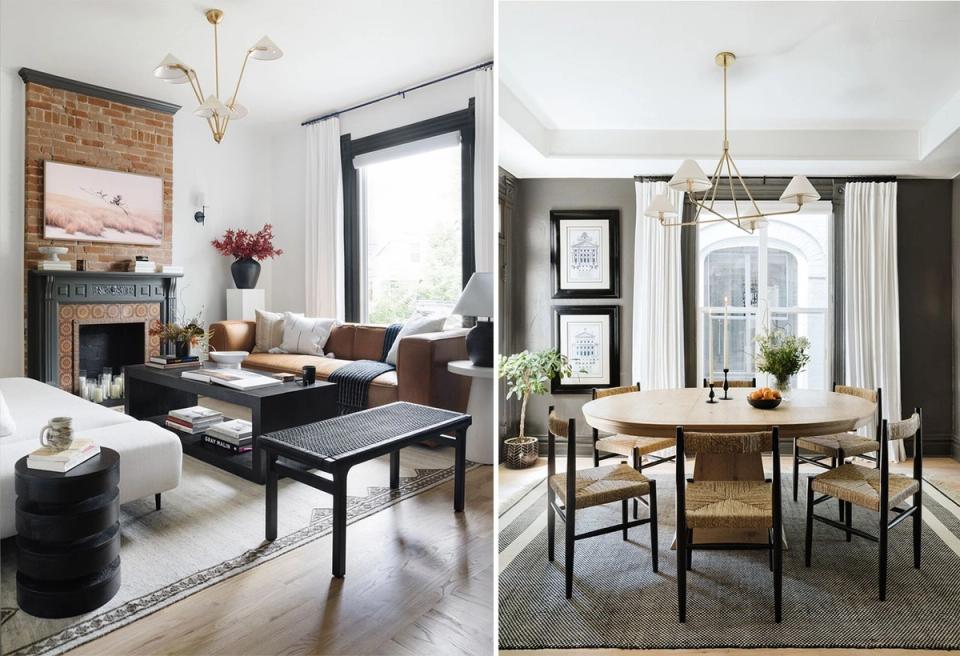
The widespread adoption of open floor plans solved many problems—but it also created another. With this airy layout, the light is abundant, the space feels bigger, and entertaining is easier—but every room is now in conversation with every other room, all the time. Nowhere does this show up more than with rugs. Two rugs that would each look beautiful in their own closed room can clash hard when they sit twelve feet apart with no wall between them.
The good news: you don't have to match. In fact, matchy-matchy is usually the giveaway that someone tried too hard. The goal is coordinated, which is a different thing—rugs that share something (color, scale, texture, vibe) but don't mirror each other.
Below, 11 rules our designers use to make rugs work together in open floor plans.
If your whole open floor plan needs a designer's eye, not just the rugs, take the Havenly style quiz and we'll match you with one.
1. Vary scale
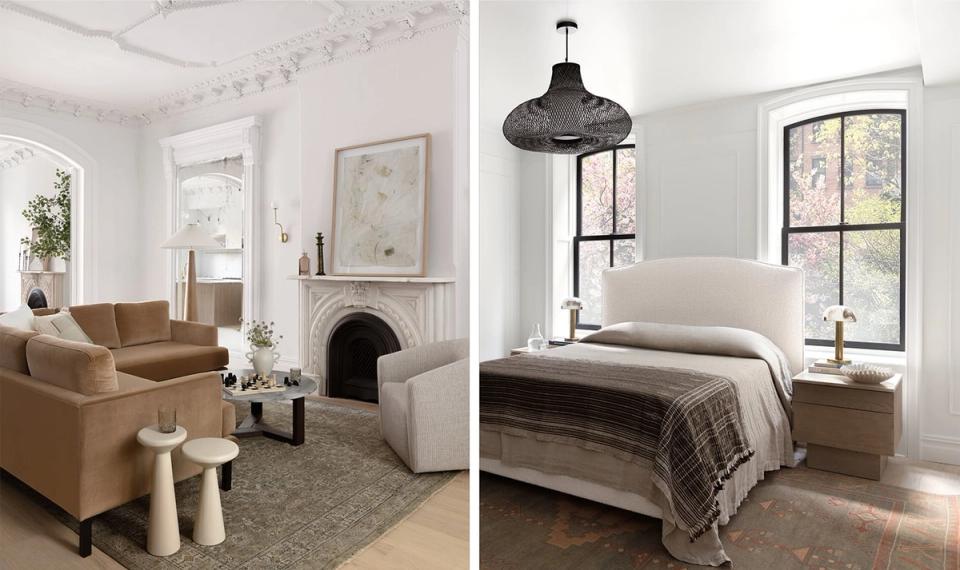
Image credit: Interior Define
Give the two rugs the same color palette, but switch up the size of the print. In an open-concept brownstone we worked on, the living room rug had a tight, small pattern repeat. The dining room rug’s imagery leaned large and slightly abstract. Same hues, different proportions. The eye reads it as variation, not chaos.
2. Go tonal
The simplest cheat code: stay inside one color scheme across multiple rugs, but use different patterns. Black-and-ivory can carry from entryway to living room if one rug has a centered, grounded design, while the other has small repeating motifs. Cohesive, but not identical.
3. Coordinate the Color Story
Working palette-first doesn't have to mean monochrome. Pick shades that play together and connect back to the furniture and decor around them. A global-print rug with berries, blues, and blacks can absolutely live next to a navy Persian as long as both pull from the same palette as the room.
4. Contrast the Texture
Color isn't the only lever. Texture does the same work, as far as providing variety, especially when both rugs are neutral. A subtly patterned wool rug with tassels in the dining room can sit next to a textured jute rug in the living room without anyone batting an eye—because the texture variation reads as intentional layering, not mismatch.
5. Mix Old and New
When in doubt, juxtapose. A modern abstract rug in the living room, a vintage runner with old-world charm in the kitchen. Mixing different eras, as long as they have complementary palettes, is instantly more interesting.
6. Play Pattern Against Pattern
Consider contrasting motifs, like a linear print in one room against an intricate, global-inspired print in the next. The trick is that the patterns are different enough—not slight variations on the same theme—so the eye reads them as two separate stories.
7. Bring in a Hide
Hides work well in open plans because they break the visual grid. A graphic geometric rug in the living room paired with an ash gray cowhide in the dining area gives you both pattern and shape contrast without the colors fighting.
8. Invert the Palette
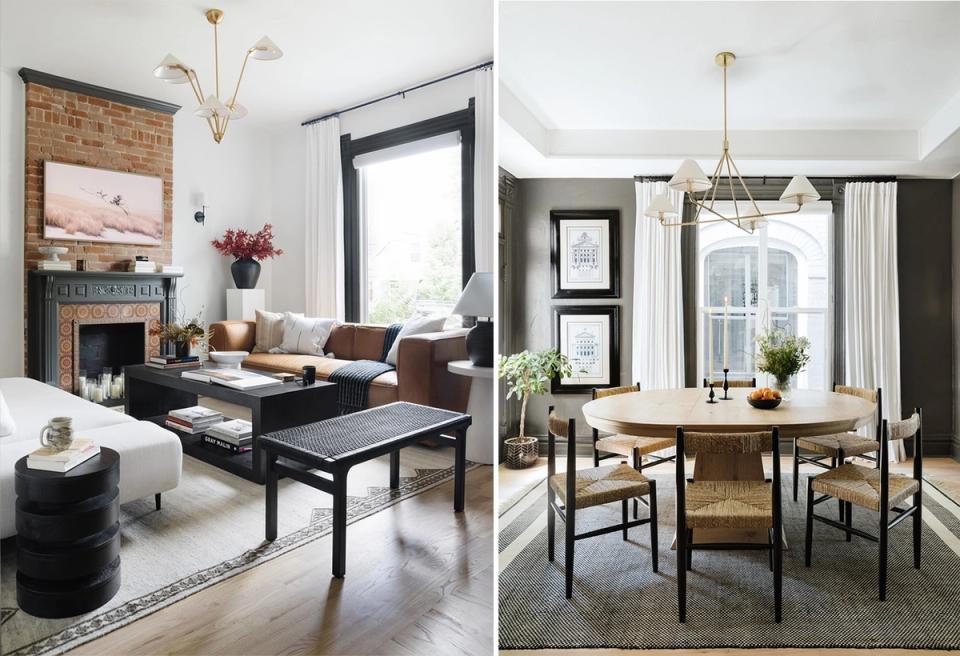
The ultimate "designer trick":Take the palette of one room and flip it for the next. Clean white walls and an ivory rug with a charcoal border in the living room. Charcoal walls and a dark gray rug with white border in the dining room. Coordinated, dramatic, clean.
9. Use Subtle Classics
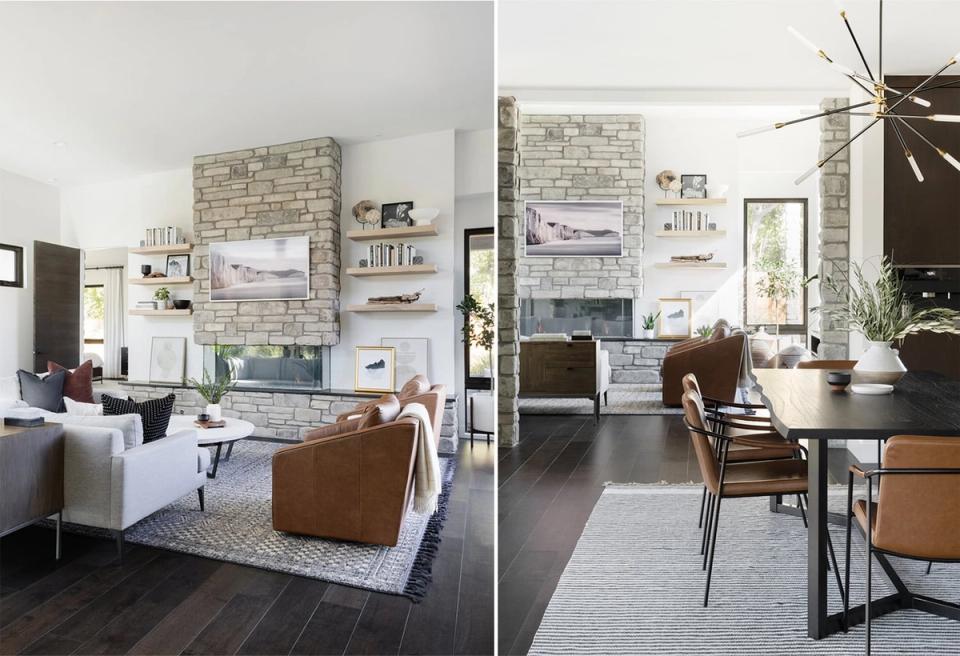
You can layer without using statement rugs at all. A diamond checkerboard in the living room next to a gray-and-white stripe in the dining room reads layered and modern, but everything stays calm.
10. Anchor with Neutrals
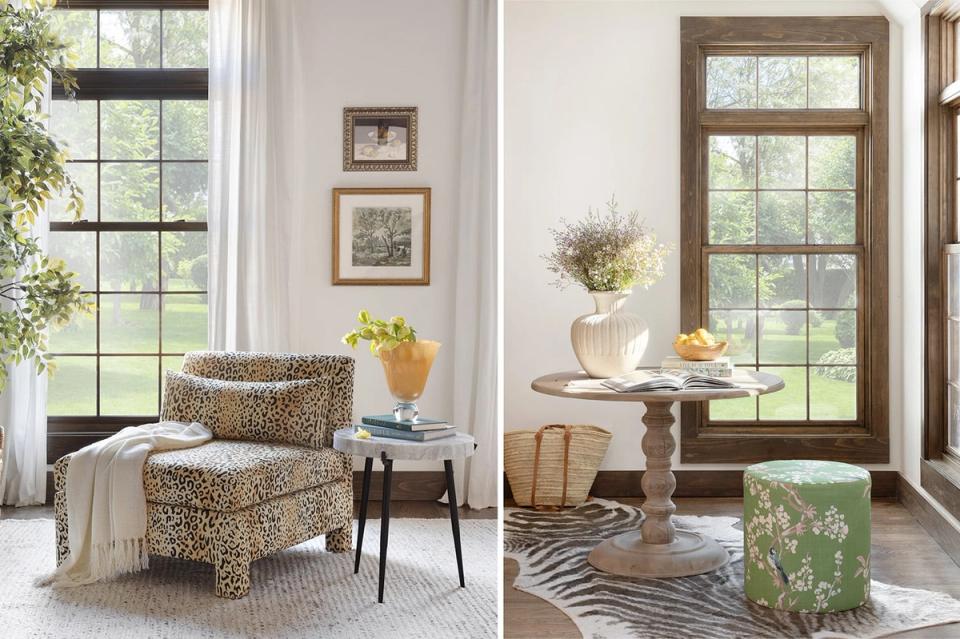
If the surrounding furniture is doing the color work—animal prints, florals, bold stripes—let the rugs play backup. Two simple, neutral, low-pattern rugs become the canvas that lets everything else pop.
11. Mix Moods
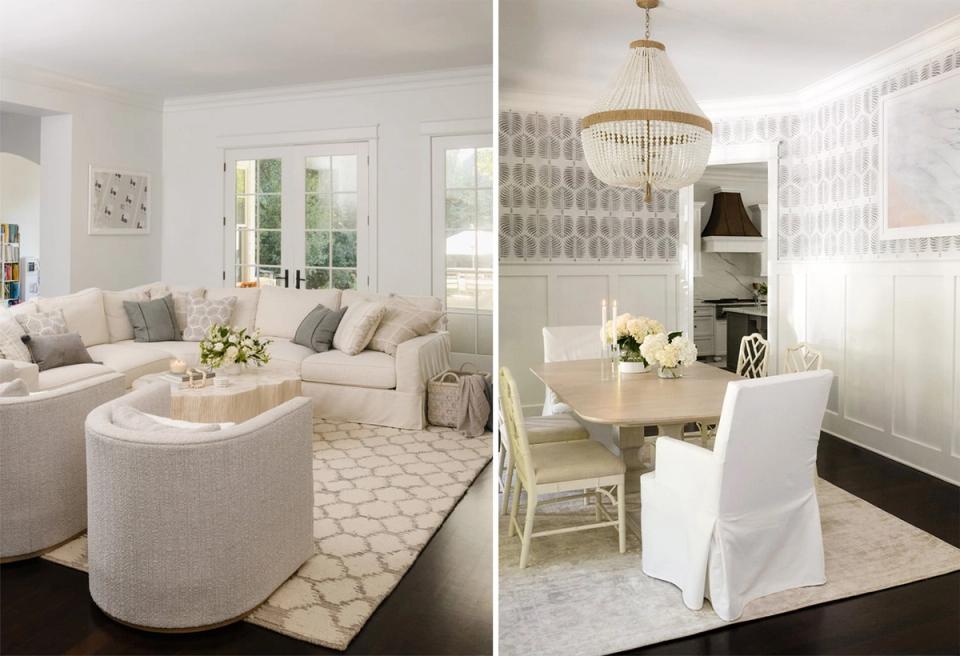
Pair a graphic modern print (hexagons, geometrics, dots) with a distressed and abstract vintage rug in a similar color. The contrast in feeling—sharp vs. soft, new vs. lived-in—does all the work.
Open Floor Plan Rug Rules (The Short Version)
If you forget everything else, remember these:
- Always coordinate the palette. Both rugs should share at least two colors.
- Vary either pattern or texture. Don't try to vary both at once, or the rooms will fight.
- Pick one rug to be the "loud" one. The other should be quieter. Two statement rugs in adjoining rooms is too much.
- Use the surroundings as a tiebreaker. If you can't decide between two rugs, look at the walls, the upholstery, and the wood floors. The rug should agree with at least two of them.
- Don't be afraid to use the same rug twice. Two of the same rug—or two from the same collection—in adjoining rooms is a power move when the room layouts are mirror-image.
Frequently Asked Questions
Do rugs in adjoining rooms have to match?
No. They should coordinate, which means share a palette or sensibility, not be identical. Matching rugs in adjoining rooms can actually look more amateur than mixed-but-coordinated rugs, because matchy reads "I bought these as a two-for-one set."
How many rugs is too many in an open floor plan?
One rug per defined zone is the rule. A typical open floor plan with a living room, dining area, and entry can comfortably hold three rugs. Add a fourth (a runner in a hallway, a small rug in front of the sink) only if the colors stay consistent.
What's the best way to define zones in an open floor plan?
Rugs are the most powerful tool. Each rug should be large enough that the main furniture in that zone sits at least partially on it—usually the front legs of any sofas or chairs. Smaller "floating" rugs read accidental.
Should the rugs in adjoining rooms be the same size?
Not necessarily. The size depends on the room, not on what rug’s next to it. A living room often needs an 8'x10' or 9'x12'; a dining room is sized to the table (usually 24 inches of rug beyond each edge of the table); an entryway often takes a runner or small rectangle.
Can I use the same color rugs in two adjoining rooms?
Yes, especially if you vary the pattern or texture. Two ivory rugs next to each other can look great if one is a flatweave and the other has a more textured pile, or if their patterns differ in scale.
What's the easiest way to coordinate rugs if I'm not a designer?
Stay tonal. Pick two rugs that share one or two colors, but have different patterns or textures. Avoid pairing two highly saturated rugs, two highly patterned rugs, or two rugs that are clearly from different eras unless you're going for an eclectic look on purpose.
Should hardwood floors influence the rug choice?
Yes. The color of your floors (warm honey vs. cool gray vs. deep walnut) matters. Warm floors call for warmer rugs; cool floors call for cooler ones. A warm rug on cool floors (or vice versa) can work, but the room has to commit to one or the other elsewhere.
When in Doubt, Bring in a Designer
Coordinating rugs is one of those decisions that's easy to overthink and easy to get wrong. If you're staring at two rug swatches and can't tell which one works, our designers can. They'll look at the whole space—rugs, furniture, paint, light—and tell you what's actually going to land.
Related Articles
- How to Choose a Rug for Any Room
- Best Rugs for Every Budget
- Living Room Layout Ideas
- How (and Where) to Buy Affordable Online Rugs
This story was originally published on September 4, 2024. It was updated on June 4, 2026.
