How to Mix Wood Tones Like an Interior Designer: 9 Expert Rules
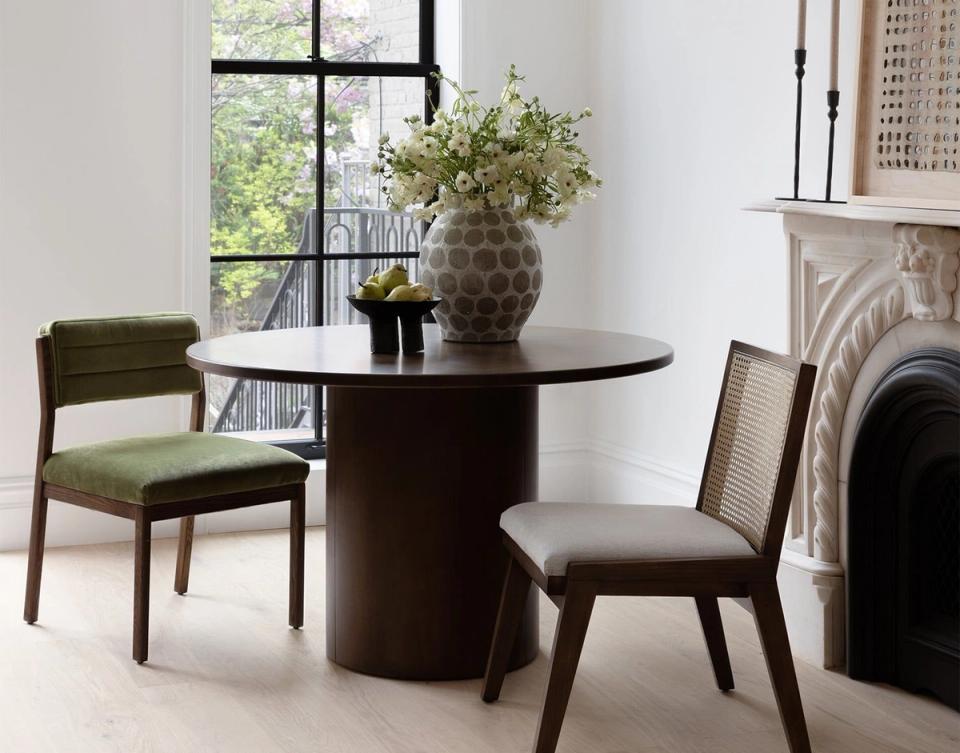
After thousands of design projects, you start to see the same missteps show up in nearly every home. Curtains hung too low. Furniture that matches so hard it flattens the room. And the big one: a living room or dining room where every piece of wood is the same tone.
A single wood tone used throughout a space—the floors, the dining table, the TV stand, the bookshelf—creates a flat, one-dimensional look. The floor disappears into the furniture. The furniture disappears into itself. Nothing stands out because nothing is different.
Mixing wood tones fixes that. Done well, it adds depth, warmth, and the kind of layered look that makes a space feel designed instead of bought.
Here's how to do it, according to Havenly designer Melissa Wagner.
1. Start with a primary wood tone
Every room needs a dominant wood tone. From there, everything else plays off it.
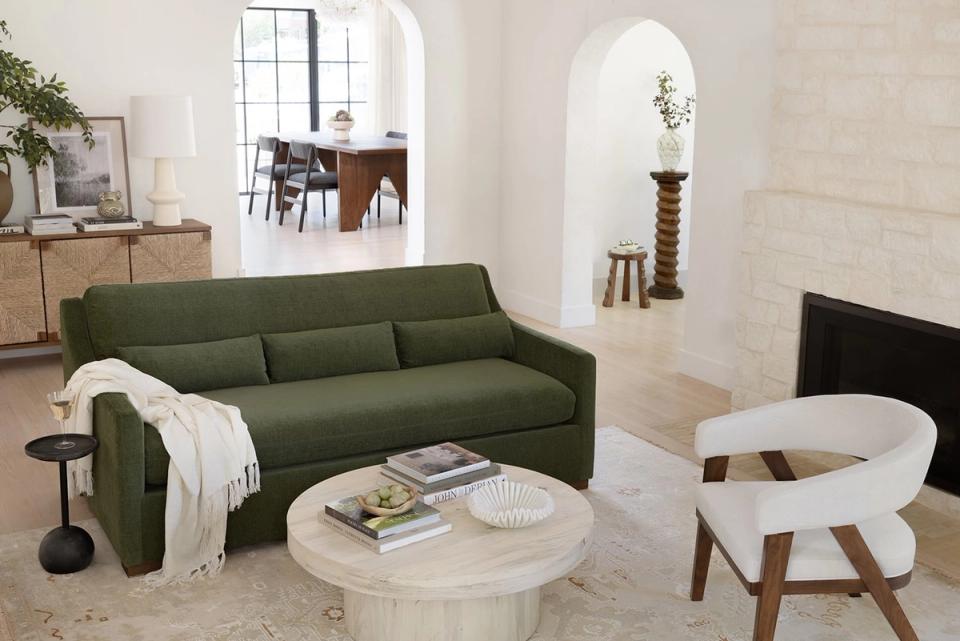
If you have wood floors, that's your primary decision made. If you don't, look to the largest or most prominent wood piece in the room. That might be a dining table, a sideboard, a bookcase, or a media console. Whatever it is, it's the anchor.
Once you've identified the anchor, the rule is simple: the wood you add should complement it, not compete with it. Light oak floors pair well with sand, honey, and walnut tones. They clash with cool-toned driftwoods and whitewashed woods.
Designer tip: If you're not sure whether a wood will work with your floors, hold a fabric or paper sample against the floor in natural light. If the undertones fight each other (one pulling warm, one pulling cool), they'll fight in the room, too.
2. Go high-contrast
This is the easiest way to make mixed wood tones look intentional. Instead of trying to land woods that are almost the same (more on that in a second), go the other direction entirely.
Black-stained chairs against a driftwood dining table. An ebony coffee table with sand-toned side tables. A dark walnut console under a pale oak floating shelf.High-contrast wood pairings read as deliberate. Low-contrast pairings read as a mistake.
3. Skip the "almost-match"
Trying to find furniture in the exact same stain is nearly impossible unless you're buying a matching set from one retailer. And a matching set, while an easy purchase, reads as a showroom, not a home.
What tends to happen instead is that people end up with three pieces that almost match, but not quite. They’re different enough in color that the eye registers a mismatch, but not different enough to feel like a deliberate choice.
The fix: commit to variety. A black coffee table, a warm walnut stool, and a blonde oak media console in the same room will feel layered and intentional. A black-brown coffee table, a medium-brown stool, and a slightly-lighter-brown media console will feel like you shopped on three different weekends and couldn't quite remember the hue you were going for.
4. Pick a color story
If high-contrast feels like too much, there's a middle path: mix wood tones within the same general family.
All light woods—white oak, blonde ash, pale pine—will feel cohesive without being matchy. So will a mix of dark woods: walnut, ebony, espresso. The pieces look different enough to have their own identity, but they share a temperature and a mood.
This is a good strategy for bedrooms and dining rooms, where too much contrast can feel busy.
5. Break it up with a rug
If your wood tones are closer than you'd like—or your floors and furniture are reading too warm together—a rug can reset the room.
A cool-toned vintage rug sandwiched between a walnut coffee table and warm wood floors cuts the monotony and introduces a new color entirely. Jute and sisal work similarly, adding a sandy, neutral layer that breaks up wood-on-wood. The rug doesn't have to match anything— its job is to interrupt.
Live-edge wood pieces and heavily grained wood also help. A coffee table with visible knots and texture reads as a separate object from the floor beneath it, even if the tones are close.
6. Go tonal, but add contrast somewhere else
You can absolutely lean into matching wood tones—if you balance them with strong non-wood contrast elsewhere.
A living room with wood ceilings, a wood accent chair, and a wood fireplace mantel all from the same color family can work beautifully, as long as the walls, rug, sofa, and coffee table bring in high-contrast white, cream, or black. The wood becomes one consistent voice in the room, while the rest of the space provides the variation.
Without that contrast, tonal wood starts to feel oppressive. With it, the space feels warm and grounded.
7. Vary shapes and sizes
If you're committed to a single wood tone—say, dark walnut throughout—you can still add variation through form.
Combine a rounded accent chair, a scalloped pedestal, an undulating stool, and a sculptural dining table all in that same walnut. The tone is consistent as the shapes do the work of creating visual interest.
This is a good approach if you've inherited or invested in a set of wood furniture and don't want to swap any of it out. Add at least one piece with an unexpected silhouette and the whole room opens up.
8. Count cane, rattan, and wicker as wood
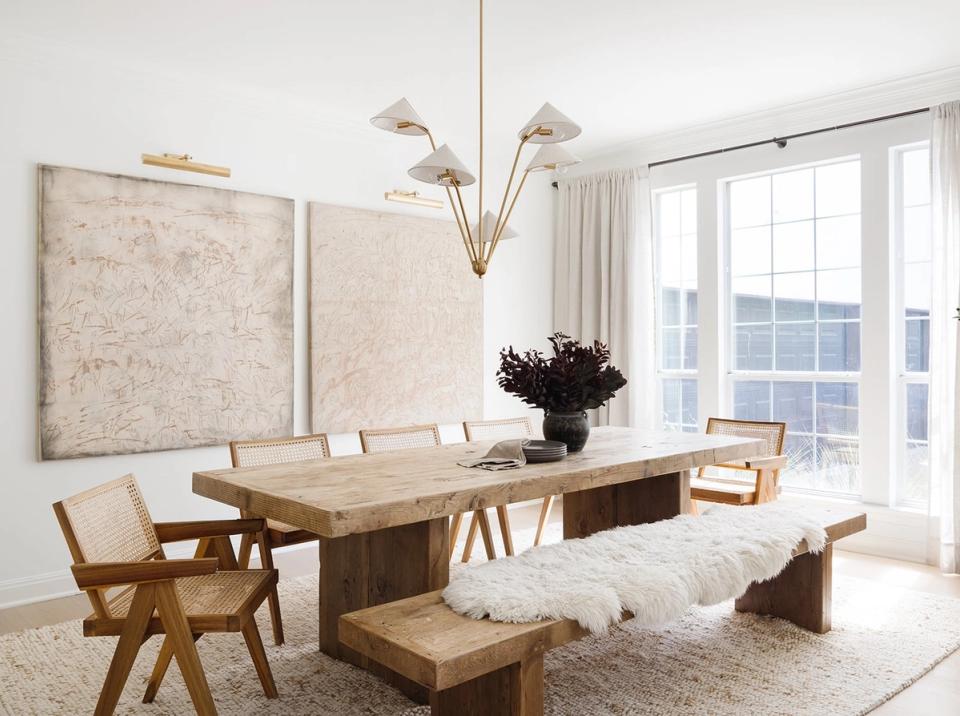
Wood doesn't have to mean planks. Cane, rattan, wicker, and bamboo all bring the same natural, earthy quality to a room while adding texture that solid wood can't.
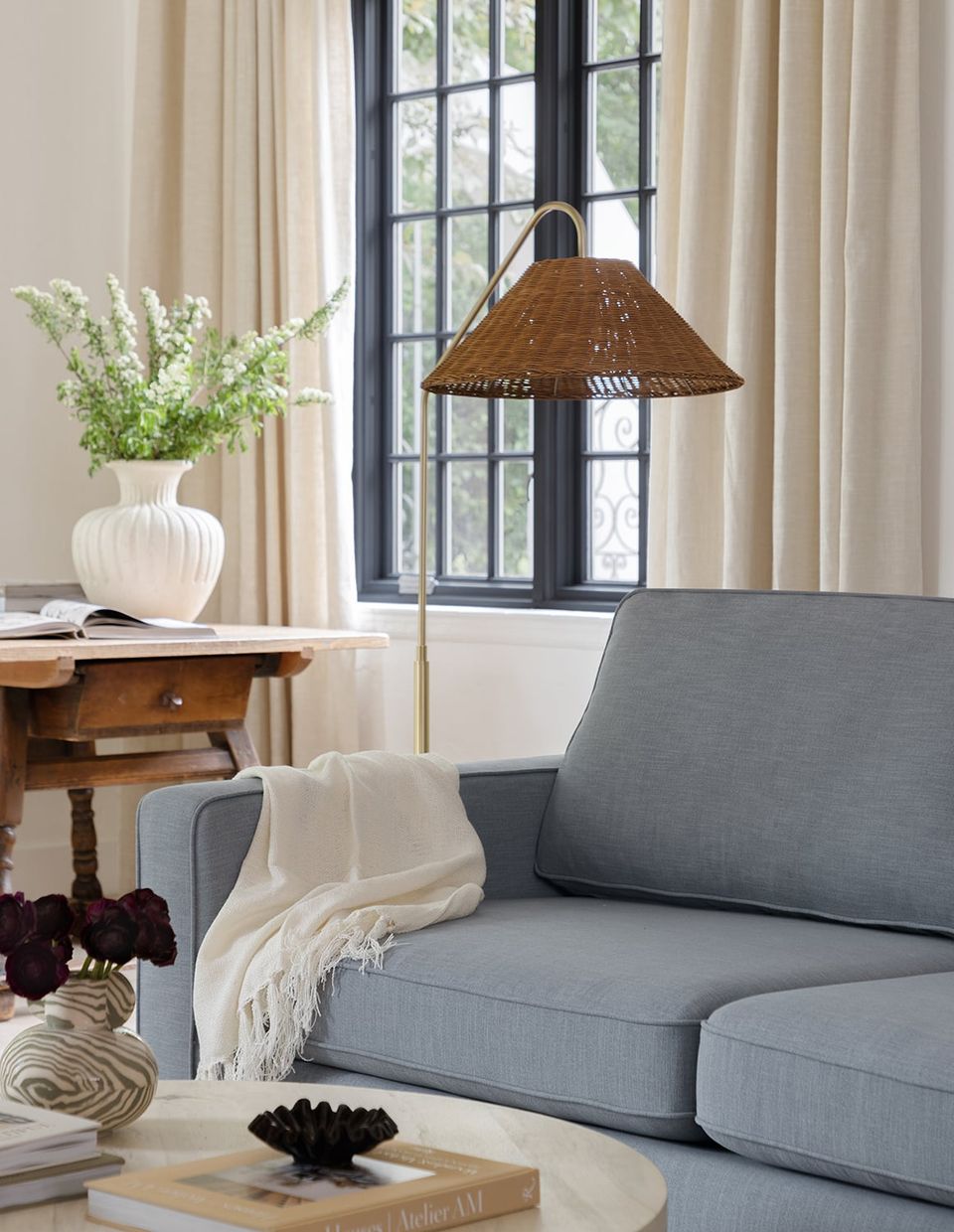
Consider a cane-back dining chair next to a solid wood table or a rattan pendant over a walnut console. These pieces count as part of your wood story—and because their texture is so different from flat, grained wood, they solve the monotony problem without introducing a new tone at all. A leather-and-wood dining chair does something similar: same color family, completely different material feel.
9. Use lighting to add wood where you wouldn't expect it
Wood lighting has been steadily growing in popularity, and it's one of the easiest ways to add an unexpected wood element to a room.
Table lamps with wood bases. Floor lamps with rattan shades. Wicker pendants, wood-beaded chandeliers, wall sconces with carved wood details. These pieces tend to be more sculptural than furniture, which means they pull their weight visually while adding warmth and texture.
Lighting is also a lower-stakes place to experiment. If you're not sure whether an ebony finish will work with your existing pieces, a $200 lamp is a much easier test than a $2,000 dining table.
A quick rule of thumb
Most well-designed rooms have three wood tones going at once: a light, a medium, and a dark. If you're staring at your living room wondering what's missing, count the wood. If you're at one or two tones, adding the third will usually pull the room together.
Want help getting the mix right?
Mixing wood tones sounds simple until you're standing in the middle of your living room with three swatches that all look slightly different. That's the exact kind of decision a Havenly designer can make in about five minutes.
Take the Havenly style quiz—it takes 10 minutes and matches you with a designer who'll build you a complete room plan with wood tones that actually work together.
Not ready to commit? Try Havenly AI—snap a photo of your room and see it reimagined with a balanced mix of wood tones and textures.
Frequently asked questions
Can you mix warm and cool wood tones in the same room?
Yes, but be intentional about it. The easiest way to make it work is to lean one direction (warm or cool) for the majority of wood pieces, then add a single contrasting piece as an accent. A living room with warm walnut furniture and one driftwood side table reads as mixed but cohesive. A room split evenly between warm and cool woods often reads as conflicted.
How many wood tones should be in one room?
Three is the sweet spot for most living rooms and dining rooms: a light, a medium, and a dark. Two can feel flat. Four or more tends to look busy, unless you're working with an open-concept space or a large room.
Do wood floors count as one of your wood tones?
Yes, and they're usually the dominant one. Your floor is the largest continuous wood surface in the room, which means it serves as the baseline that every other wood piece has to work with.
How do I mix wood tones with existing hardwood floors?
Identify the undertone of your floors first—warm (honey, red, yellow) or cool (gray, ash, whitewashed). Then pick furniture that either complements the undertone (same temperature, different shade) or contrasts it sharply (black stain against honey oak, for example). Avoid the middle ground, which is where "almost-matching" happens.
What wood tones go with white oak?
White oak pairs well with almost anything because its undertone is neutral. Dark walnut, black-stained wood, warm honey oak, and pale ash all work. Cool-toned whitewashed woods can clash if white oak is the dominant tone in the room, but they can work as accents.
Is it okay to have all the same wood in a room?
It can work, but only if you add strong contrast elsewhere—white walls, black accents, a rug, or varied shapes in the wood pieces themselves. Without that contrast, single-tone wood rooms tend to feel flat.
Related reading
- 16 Home Color Palette Ideas
- 35 Earth Tone Color Palettes
- How to Find Your Interior Design Style
- Living Room Layout Ideas
This story was originally published on September 15, 2023. It was updated on May 26, 2026.
