How to Hide Cords in Your Home: 7 Designer Tricks That Actually Work
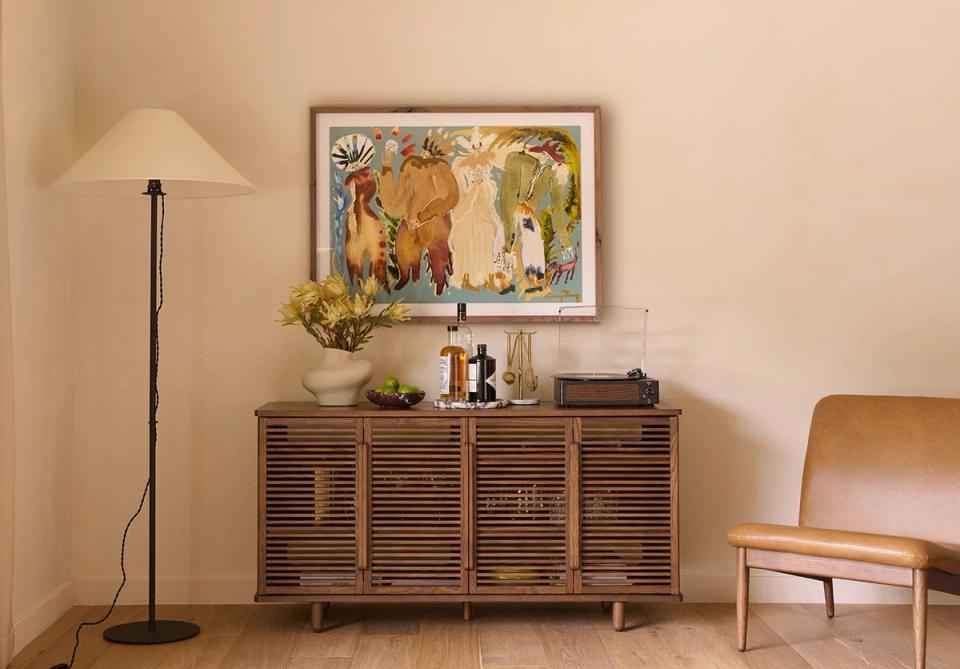
Almost nothing kills the look of a finished room faster than a tangle of cords. The styling's done, the art is hung, the rug is centered—and then there's a black cable snaking down the wall from your sconce to the outlet six feet below it.
The thing is, you don't have to choose between a beautiful room and using your electronics. You just have to get a little creative about where your cords live.
"Outlet placement is almost always outside your control," says Havenly designer Brady Burke. "But how visible the cords are is completely up to you. Most of the fixes are easier than people think—you don't need an electrician for any of these." Some take five minutes, the most ambitious one takes a weekend—but they all work.
Below, seven designer-tested ways to hide cords for good.
1. Clip cords to the back of furniture
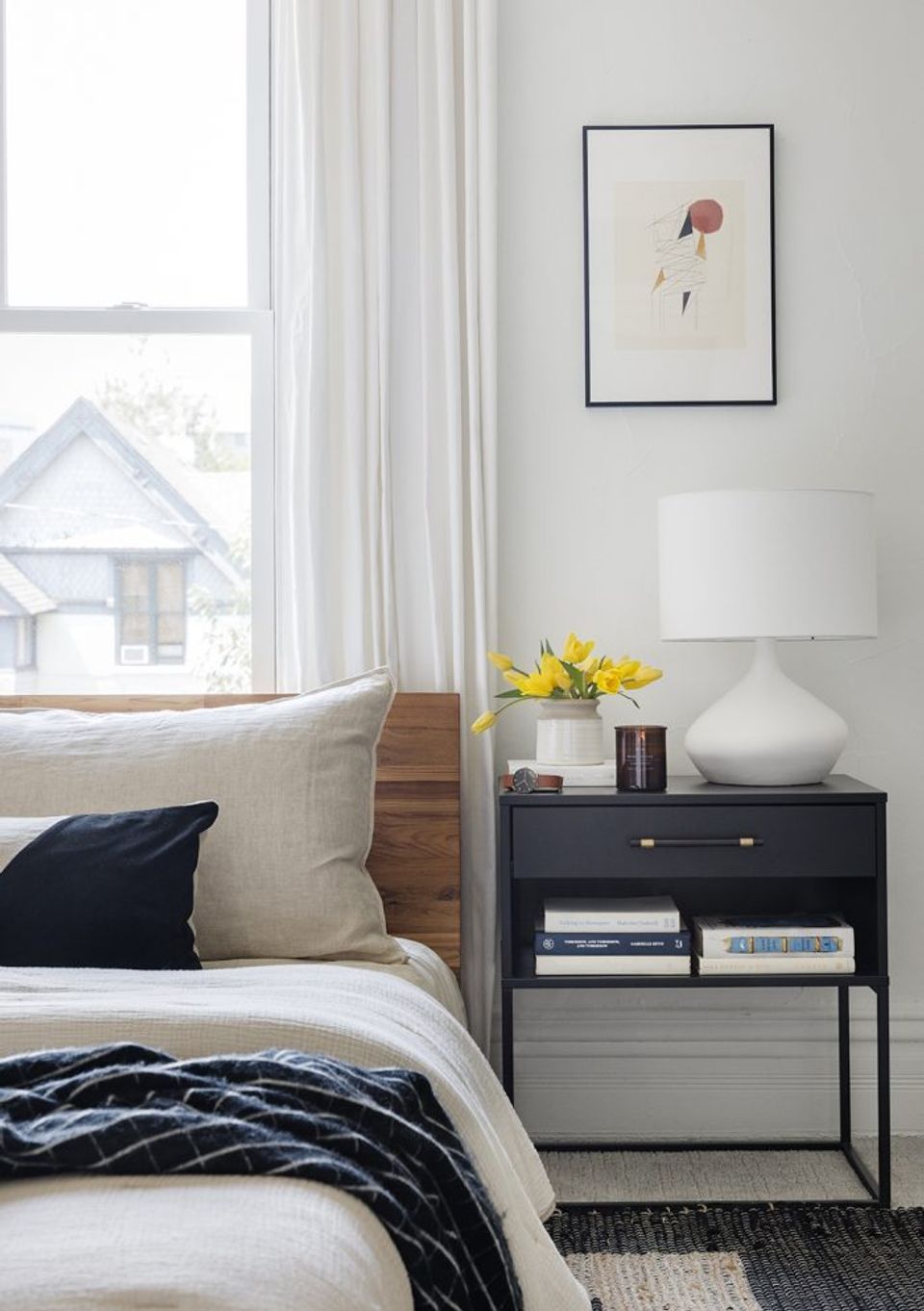
Let’s start with the easiest, cheapest fix: Rather than letting cords run along the wall or floor, use small wire clips (or even Command hooks) to run them along the back leg of a nightstand, the back of a console, or the side of a bookcase. The cord is still there—it's just no longer in your line of sight.
For an extra layer of disguise, paint the cord the same color as the furniture. A brown cord against a brown nightstand effectively disappears.
Works best for: lamp cords near nightstands, charger cables, anything where the cord runs a short distance to an outlet.
2. Run cords under a rug

The fastest trick in the book? Lay cords flat along the floor and run them underneath your area rug. A piece of electrical tape every foot or so keeps them from bunching up. If you have a corded item that lives far from the edge of your rug, you can cut a (very, very) small slit in the rug and slip the cord through it, which is much less noticeable than running the cord around the rug's perimeter.
Works best for: floor lamps in the middle of a room, anything where a cord needs to cross open floor space.
A quick safety note: running too many cords or any high-wattage cord (a space heater, a heavy-duty extension) under a rug is a fire risk. Stick to cords for lamps and small electronics here.
3. DIY a pedestal
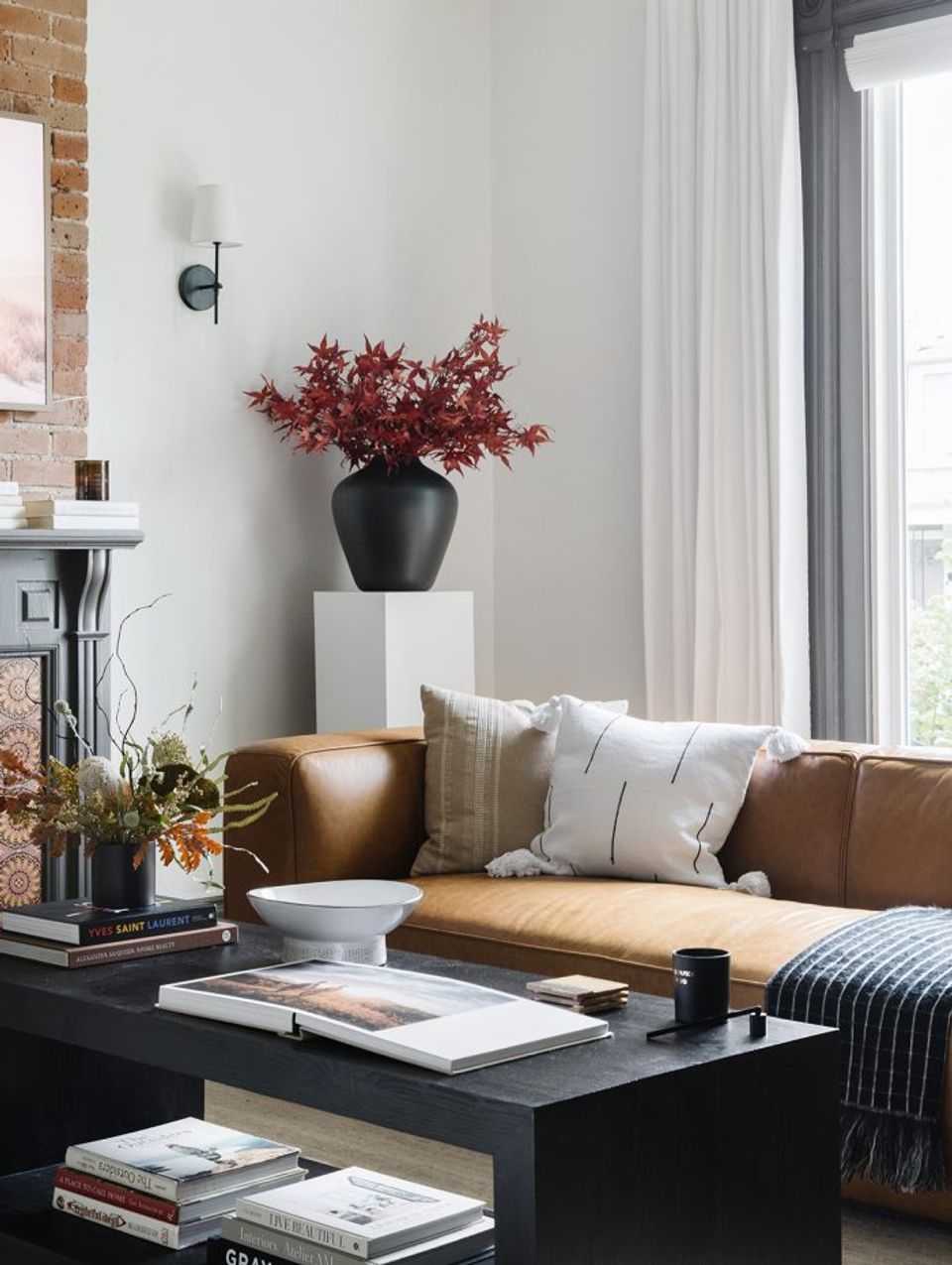
For the electronics you can't conceal—Wi-Fi routers, modems, cable boxes—you can buy a simple storage box, then cut a small hole in the back for the power cable. But if you want something that actually looks intentional, build a small piece of furniture like a pedestal around the eyesore.
In one Havenly project, Brady built a museum-style pedestal with a hollow back to house a Wi-Fi router and the cords feeding it. "It looks like something you'd find at CB2," he says, "but it was really a simple weekend project."
Other options that work: a slim console with a hollow back, a slatted wood box, and a tall ceramic vessel turned upside down with a hole at the base—anything aesthetically pleasing that gives the router somewhere to live and lets the signal escape.
Works best for: routers, modems, cable boxes, anything that needs to stay in the open room (not in a closet) for the signal, but doesn't need to be visible.
4. Paint cords to match your baseboards or walls
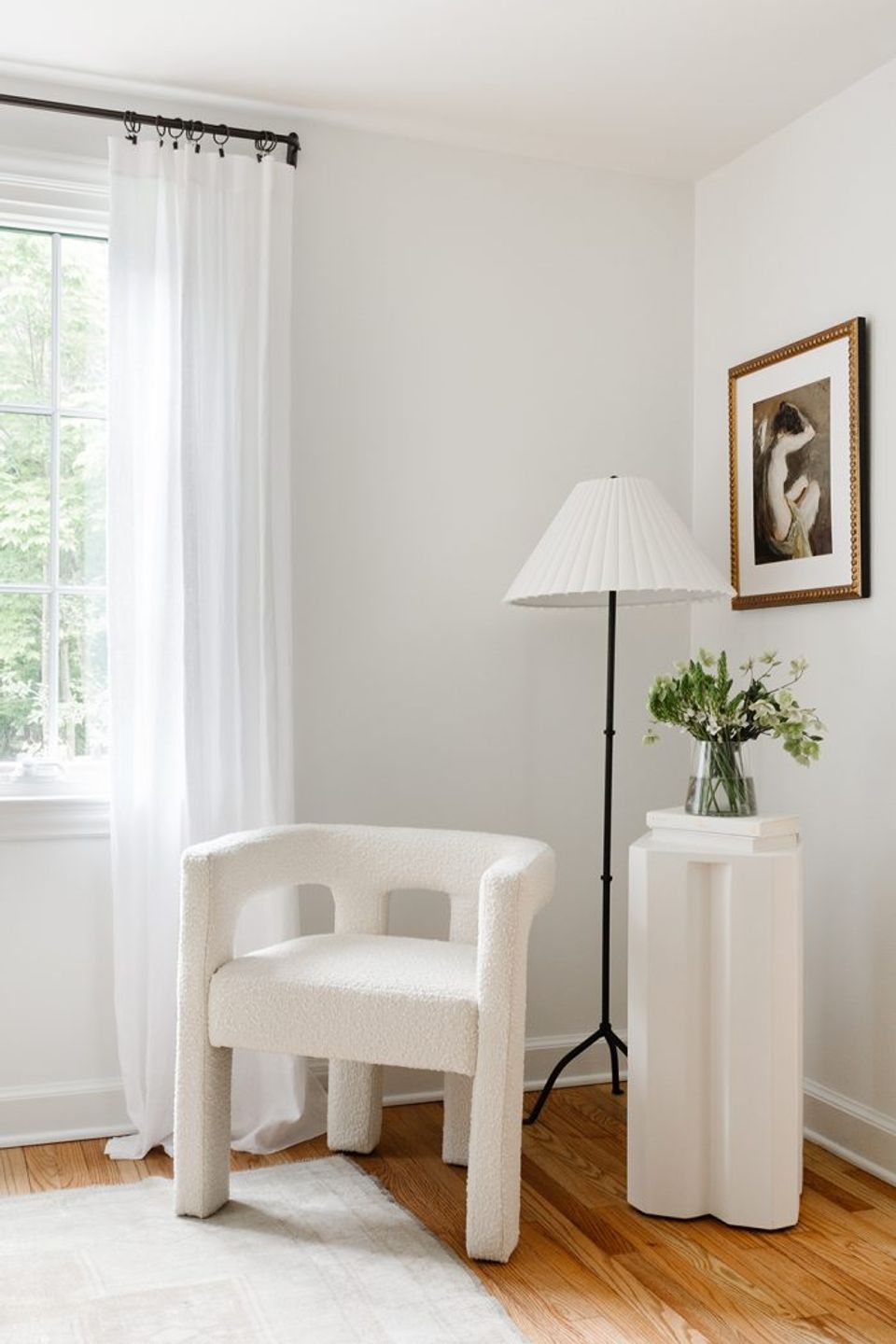
The design trade secret we’re thrilled to share? Run cords flat along the top of your baseboard using small clips or (delicate) staples, then paint them the exact same color as your baseboards or walls.
A Benjamin Moore Simply White cord on a Benjamin Moore Simply White baseboard reads as part of the trim. A Farrow & Ball Mouse’s Back taupe cord against a Farrow & Ball Mouse’s Back taupe wall disappears completely. The key word is exact—close-but-not-quite is worse than not painting at all, because the eye registers the mismatch.
Works best for: sconces, plug-in pendant lights, floor lamps running along baseboards, TV cords on the wall.
5. Swap for battery-powered or rechargeable options

The most effective trick: don't have a cord at all.
The market for battery-powered and rechargeable lighting has expanded enormously in the last few years. Many high-quality light fixtures—table lamps, wall sconces, picture lights, even chandeliers—run on rechargeable batteries that last weeks between charges.
For wall-mounted sconces especially, this is a game-changer. Instead of hardwiring (which means an electrician and patched drywall) or living with a visible cord, you can install a battery-powered puck behind a real-looking sconce shade. Brady did this in his own home to avoid hardwiring through brick.
Works best for: sconces in places without existing wiring, picture lights, accent table lamps you don't use every day.
6. Source a cord cover and paint it to match
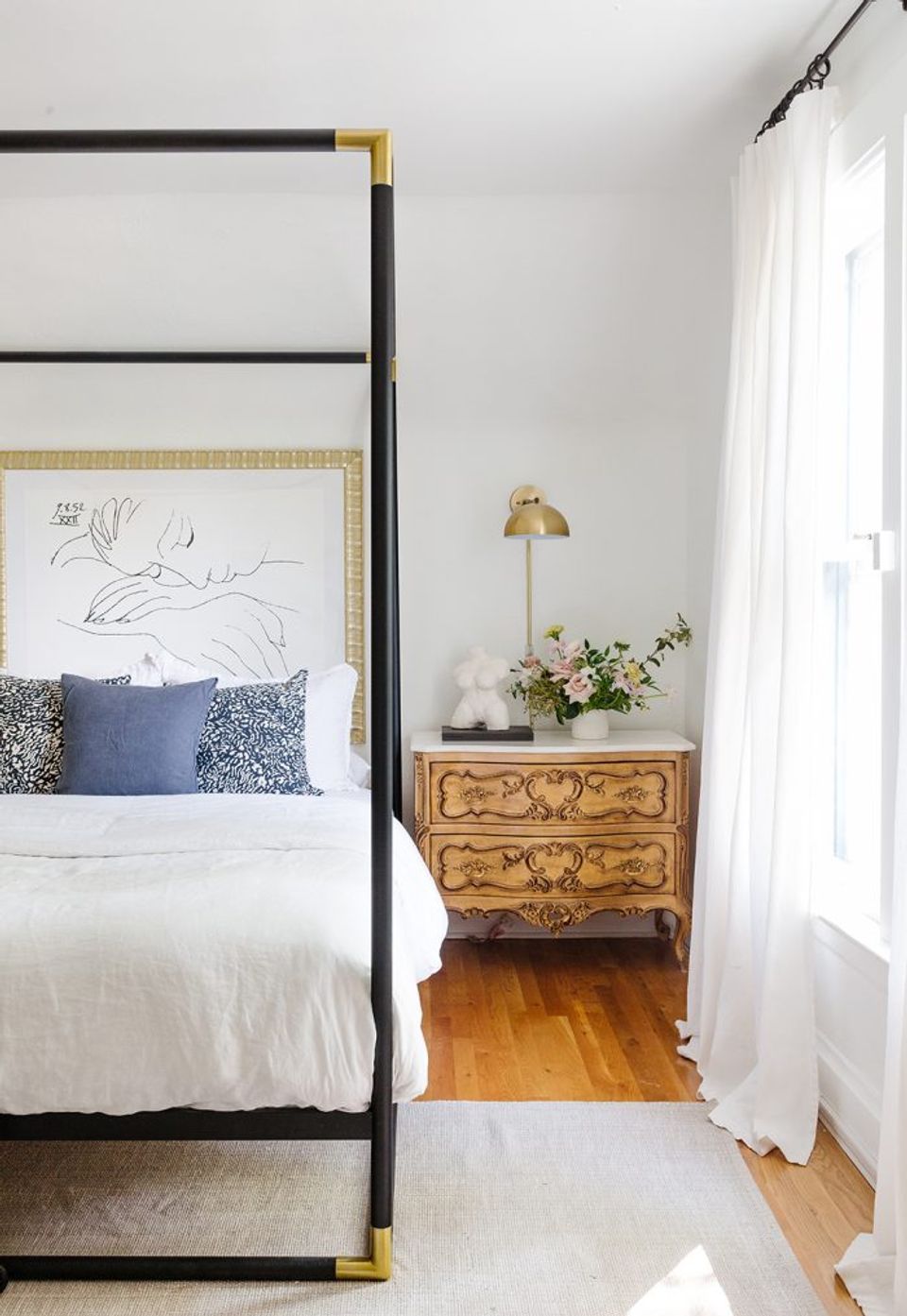
For cords you absolutely can't hide—like one running from a wall-mounted TV down to a media console—a slim cord cover is the move. They stick to the wall, hide the cord inside, and can be painted to match.
For lighting that's already up—like a plug-in sconce above a nightstand—consider a metal cord cover in a finish that complements the fixture. A thin brass cord cover next to a brass sconce reads as part of the design, not as a workaround.
Works best for: TV cords, plug-in wall sconces, anywhere you can't run the cord behind furniture or under a rug.
7. Use decor to hide the source

When you've got a messy cluster of cords—imagine a power strip, charging cables, and TV cords, all originating in the same spot—sometimes the best fix is just to put something in front of them. Try a large potted plant, a tall basket, or a console table styled with books and objects.
For nightstands and desks specifically, you can take the back off a drawer and route all your charging cables through the empty space. Cables disappear, you still have access, and from the front, the drawer looks normal.
Works best for: power strips, charging stations, the messy zone behind a TV setup.
Quick rules for any cord-hiding project
A few principles that apply across all seven tricks:
Match the cord to the surface behind it, not the surface in front of it. A white cord on a white wall disappears. A white cord crossing a brown floor stands out more than a brown cord would. If matching the cord requires painting, know that it’ll be worth it.
Don't overthink the small stuff. A single charger cable on a nightstand is not worth re-rigging your whole setup. Save the effort for the cords that actually disrupt the room—TV cables, floor lamp cords across open spaces, sconces with three feet of visible wire.
Safety first. Don't run cords through walls without a junction box, don't overload outlets, and don't run heavy-wattage cords under rugs. If a fix requires electrical work, hire an electrician.
Want a designer to help with the bigger picture?
If you're looking around your room and realizing the cords are the least of your problems, it might be time to think about a full design refresh. A Havenly designer can help with everything from cord routing to furniture layout to a complete palette overhaul—all online, in about a week.
Take the Havenly style quiz—it takes 10 minutes and matches you with a designer who can solve the cord problem and the 14 other things you've been ignoring.
Not ready to commit? Try Havenly AI—snap a photo of your room and see it reimagined, cord-free.
Frequently asked questions
Is it safe to run cords under a rug?
For low-wattage lamps and electronics, yes—as long as the cord is in good condition (no fraying or exposed wire) and the rug doesn't bunch up over it. Avoid running heavy-wattage cords under rugs (space heaters, large appliances, heavy-duty extensions)—those can generate enough heat to be a fire risk. When in doubt, use a rug pad with a built-in cord channel, or run the cord along the edge of the rug instead.
Can I paint over electrical cords?
Yes. Use a small foam brush and a paint that matches the surface behind the cord—wall paint for cords against walls, furniture paint for cords on furniture. Two thin coats work better than one thick one. Don't paint the plug itself or any exposed metal contacts.
How do I hide the cord on a wall-mounted TV?
You have three options, presented here in order of effort. Easiest: a slim cord cover painted to match the wall—it'll be visible up close but invisible from across the room. Medium effort: an in-wall cord-hiding kit (sold at most hardware stores) that routes the cord behind the drywall to a lower outlet. Most involved: hire an electrician to install a recessed outlet directly behind the TV, so the cord doesn't travel through the wall at all.
What's the best way to hide router cords?
The router itself usually has to stay in the open for signal, so the goal is to disguise it, not bury it. A hollow pedestal, a slatted wood box, a basket, or a console with an open back all work. The cord feeding it can be run down the back of the console and into the wall outlet behind the furniture.
Do battery-powered lamps actually work well?
Yes! Thanks to technology that has improved a lot. Quality battery-powered sconces and table lamps now last 20 to 40 hours on a single charge, which means weeks of normal use between charging. They're not as bright as hardwired options, but for ambient and accent lighting (not task lighting for reading or working), they're excellent.
Is there a way to hide cords without drilling or sticking anything to the wall?
Yes. Furniture-back routing (trick one), under-rug routing (trick two), and decor camouflage (trick seven) all work without any wall modifications. Painting cords also leaves the wall untouched. The only cord-hiding methods that require drilling are in-wall kits and hardwiring—both of which are optional.
Related reading
- How to Mix Wood Tones Like an Interior Designer
- 35 Designer-Curated Earth Tone Color Palettes
- 16 Home Color Palette Ideas Curated by Interior Designers
- How to Mix Furniture Styles Like a Designer
This story was originally published on May 29, 2025. It was updated on May 26, 2026.
