Expert Color Palettes for Your Home: 16 Designer-Approved Combinations (and How to Pick One That Fits Your Space)
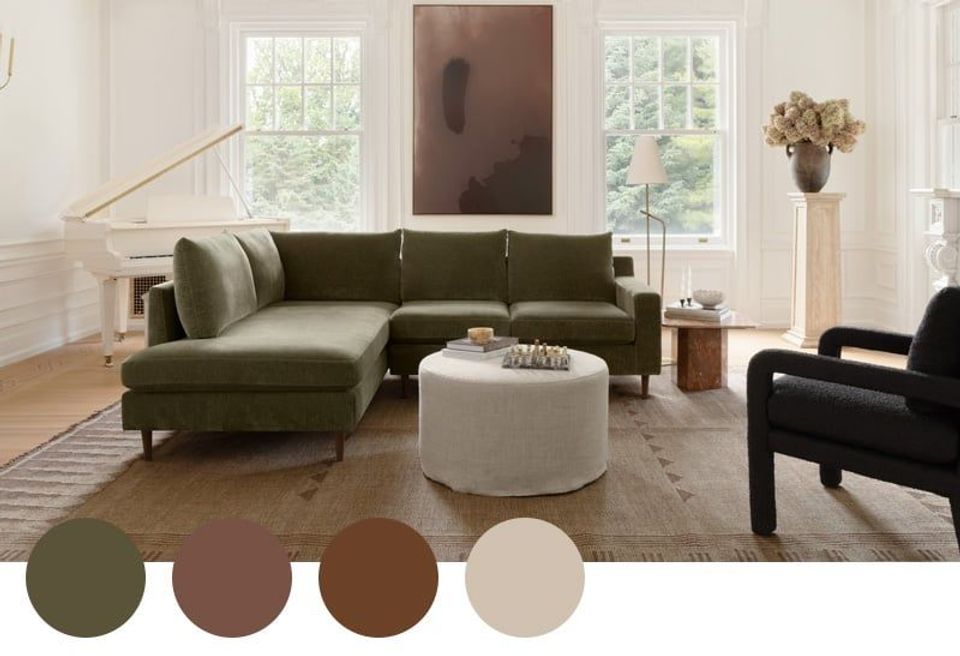
Choosing a color palette is the single most important decision in any room. It sets the mood. It dictates what furniture will work and what won't. It's also the decision people get stuck on the longest—usually because they're trying to choose from a Pinterest board of 200 saved images instead of starting with the question that actually matters: How do you want the room to feel?
That's why the very first step in the Havenly interior design process is aligning on a palette. Not paint colors, not furniture, not layout—palette first.
To make that step easier, Havenly designer Kelsey Fischer pulled together 16 color palettes that work across real homes—from soothing neutrals to bold jewel tones to balanced earthy hues. Each one is built around a specific mood. Pick the one that matches how you want your space to feel, and you've already done 80 percent of the work.
How a home color palette actually works
Before the palettes, the rules. Most well-designed rooms follow the same color structure:
Neutral base (60%): Walls, large furniture, and floors. These are the surfaces you spend the most time looking at, so they should be the easiest to live with. Whites, off-whites, warm tans, soft grays, and natural wood tones do this job well.
Dominant color (30%): The pieces that set the room's personality. Sofas, area rugs, a major piece of art or two, and accent walls. This is where you commit to a direction—moody, airy, warm, cool.
Accent color (10%): Lighting, pillows, throws, ceramics, small pieces of furniture. This is where you can have fun without committing—accents are the easiest things to swap out as your taste evolves.
The 60-30-10 rule is a starting point, not a law. But when a room feels off, it's usually because one of these percentages is wrong—too much accent color, not enough neutral base, or no clear dominant.
Now, here are the palettes.
1. Organic modern
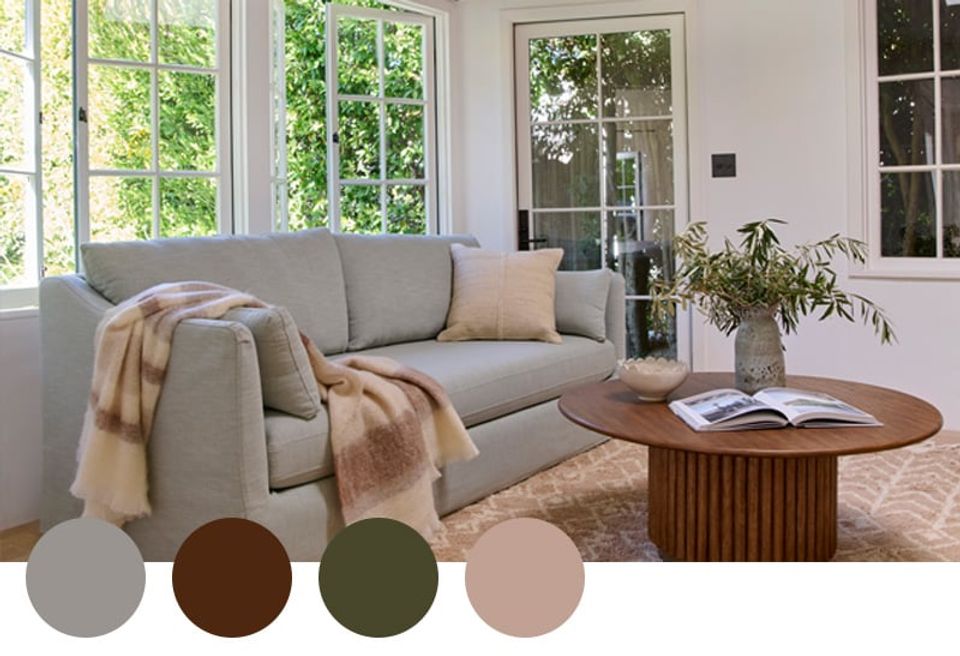
Love color but don't want to stray too far from your organic modern aesthetic? A muted palette of soft, barely-there blue, rich walnut brown, warm-toned tan, and hints of greenery gives you color without sacrificing calm.
Best for: living rooms, bedrooms, any space you want up-to-date without committing to a trend.
2. Moody neutral
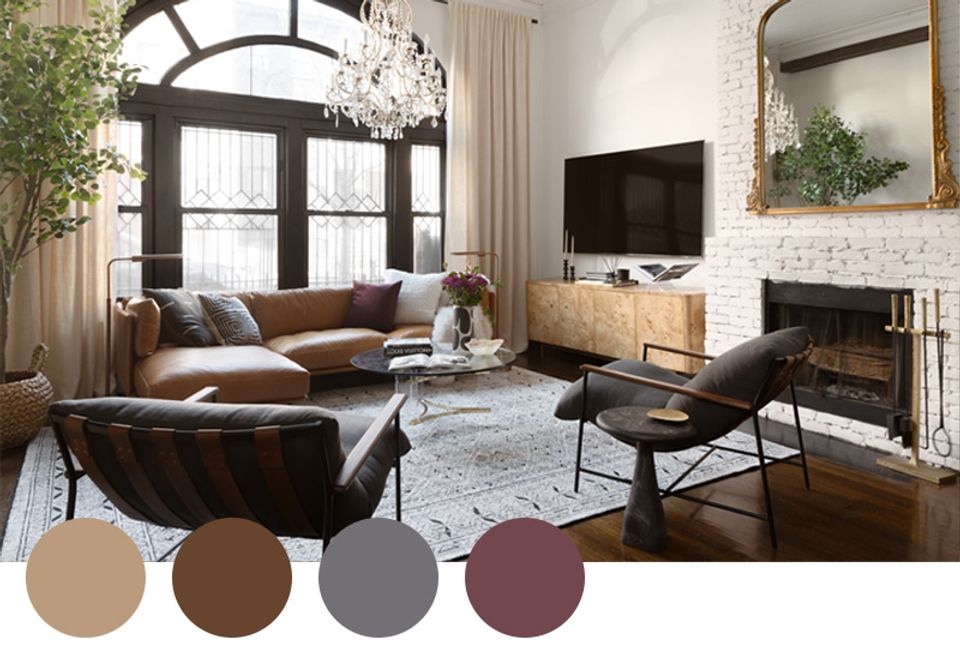
The best of both worlds: a palette that leans moody and dramatic but stays neutral and timeless. Shades of dark and light gray, rich cognac brown, warm blonde, and a pop of plum give you a striking, unique room that will still feel right in five years.
Best for: home offices, dining rooms, primary bedrooms.
3. Golden hour
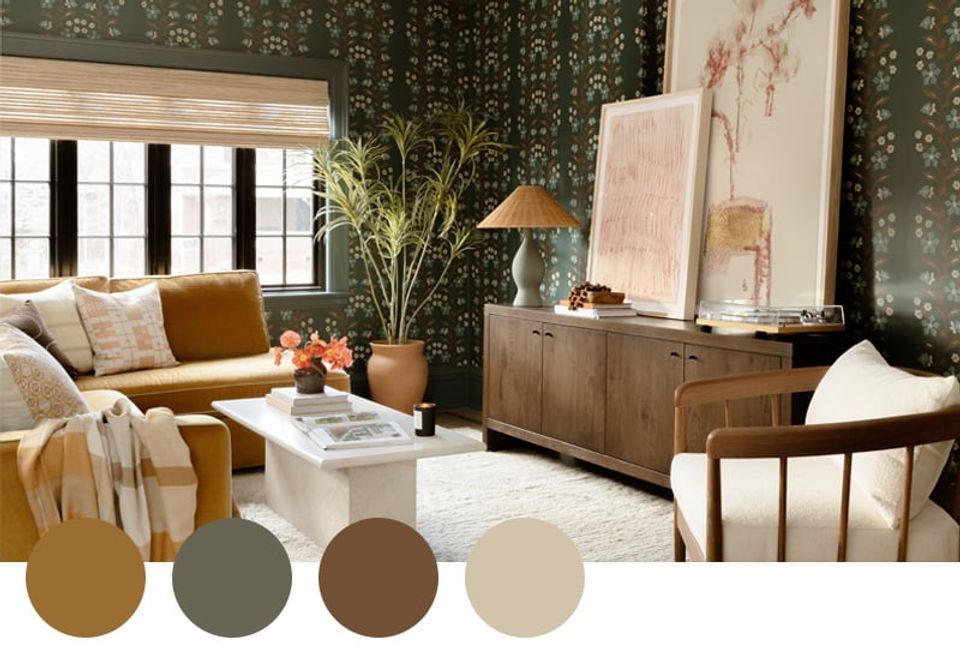
A fail-safe color combination: warm golden yellow and cool forest green. Add rich walnut tones and grounding neutrals like creamy white and tan, and you've got a flawless scheme that's dynamic and interesting but still rooted in timeless earth tones.
Best for: dining rooms, kitchens, sunlit living spaces.
4. Romantic modern
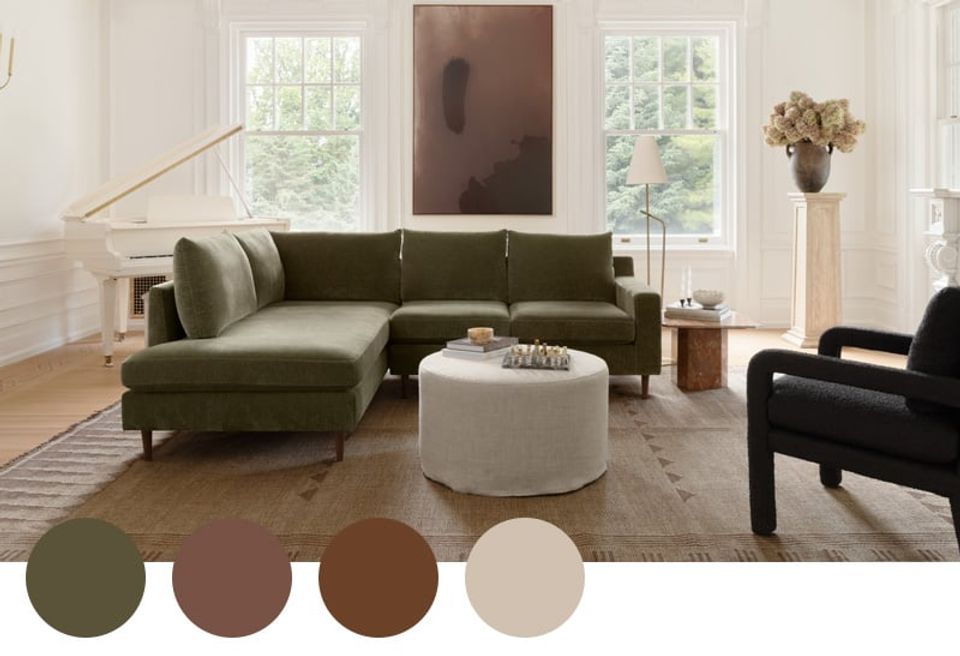
Soft tones of plum purple, soft pink, enchanting olive, and warm brown add a touch of romance to an otherwise clean, neutral base. This palette looks especially beautiful in classic homes with ornate details—like crown molding, wainscoting, and colonial-style windows.
Best for: bedrooms, formal sitting rooms, historic homes.
5. Airy neutrals
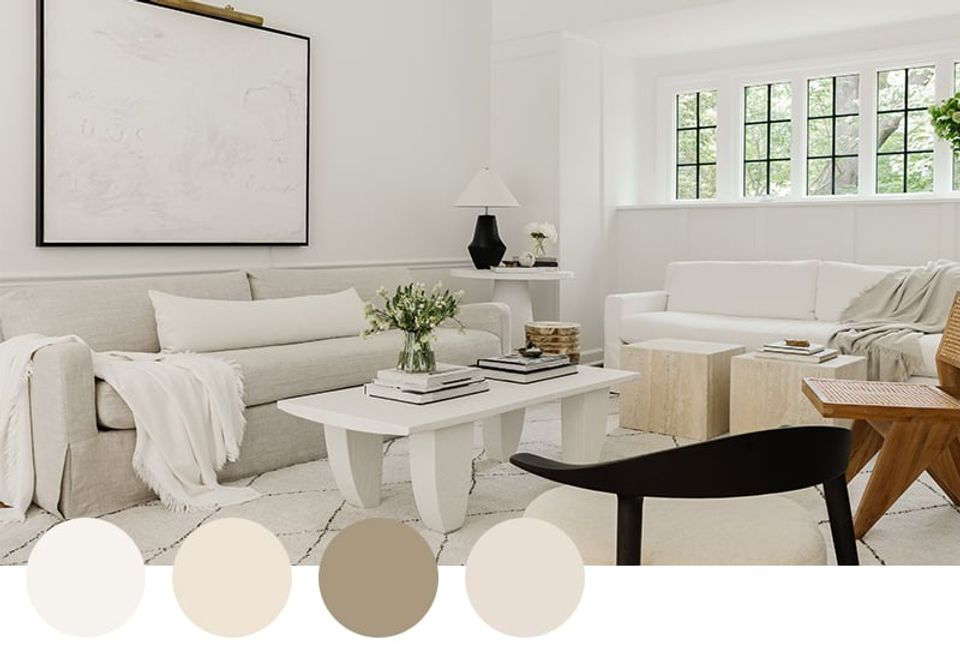
Warm minimalism in palette form: taupe, ivory, white, beige, and soft sage create a cozy, storied atmosphere that feels like a warm hug. Layer in texture-rich materials, like linen, wool, jute, and the palette stops feeling minimal and starts feeling rich.
Best for: living rooms, bedrooms, family-friendly homes.
6. Desert chic
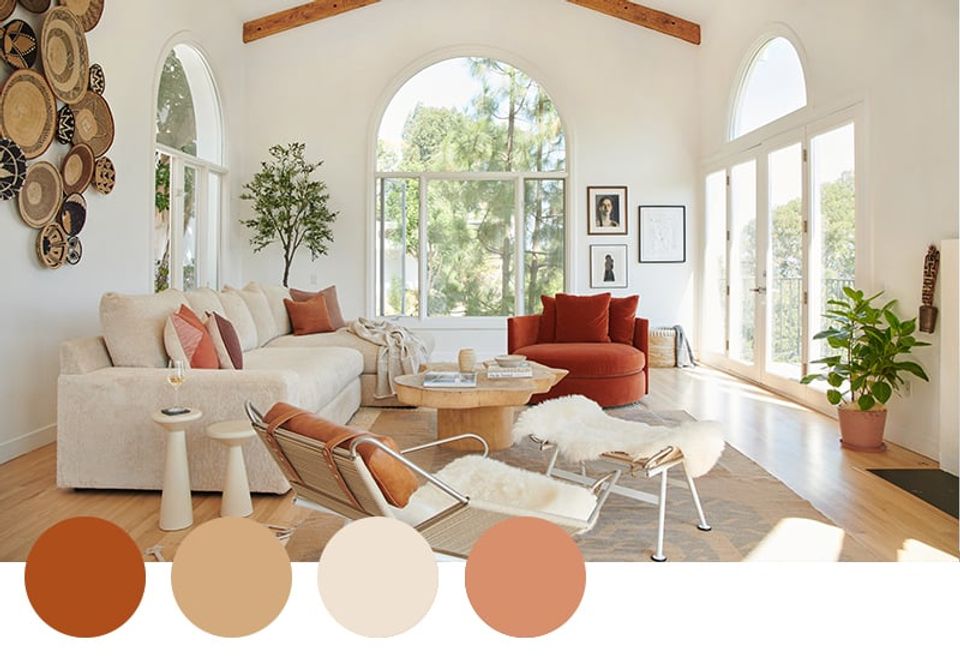
Warm neutrals like white and ivory set the stage for rusty earth tones like terracotta, sienna, and cognac, which channel the California desert. Finish with high-contrast greenery—bonus points for a cactus or two.
Best for: sunrooms, casual living rooms, Southwestern-leaning homes.
7. Warm earth tones
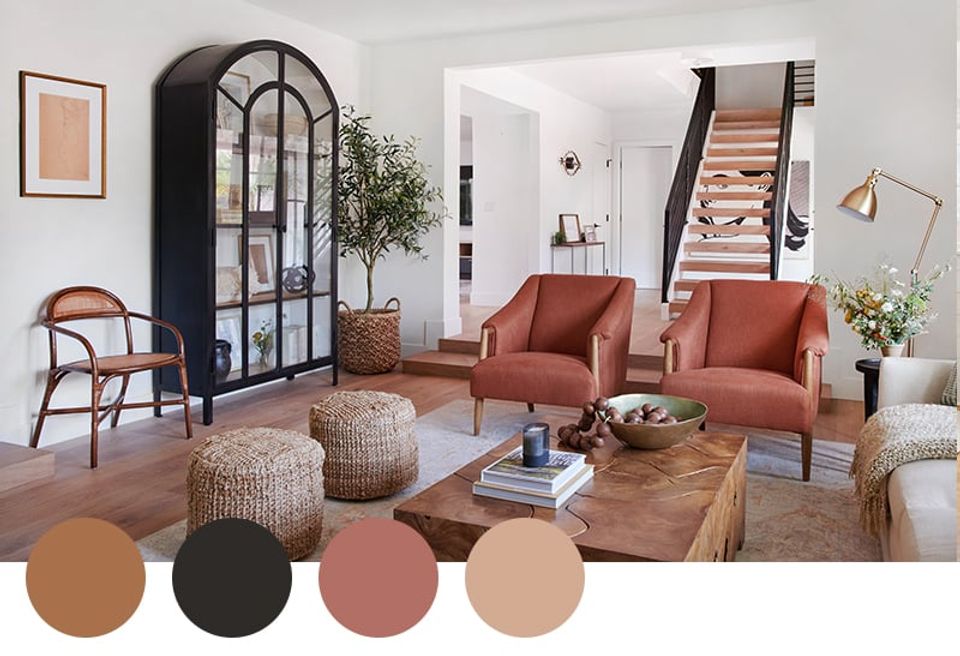
Rather than drawing from the cool end of nature's spectrum, this palette leans into the warm side: rich cacao, sunset coral, earthy ochre, and shades of sandy beige. The result is rich, inviting, and impossible to grow tired of.
Best for: living rooms, dens, and any room that needs to feel cozy.
8. Historical romance
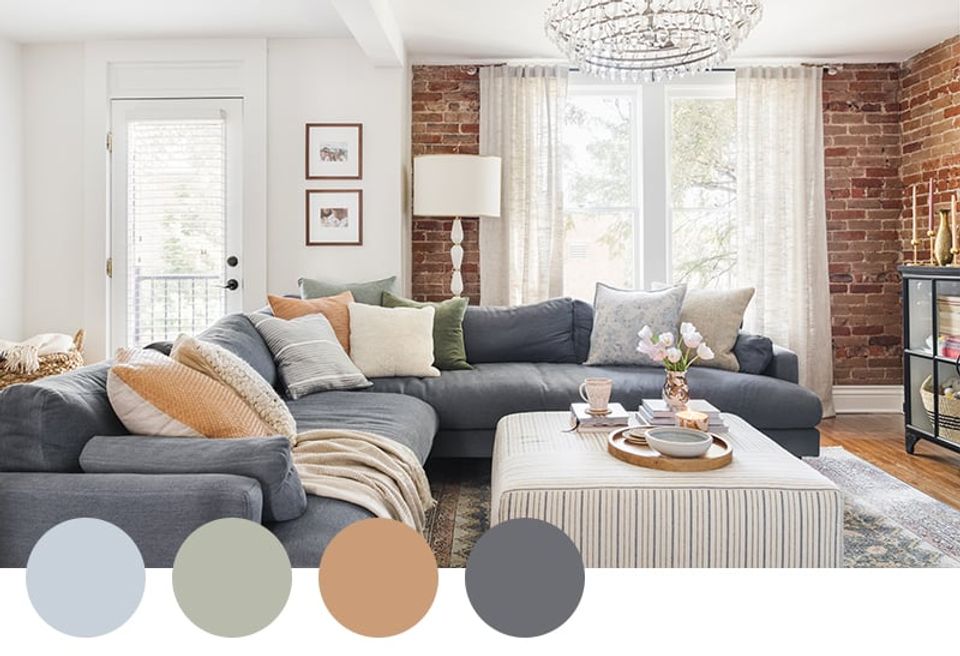
This one is almost Bridgerton-inspired. Soft gray, muted sage, pale blue, and golden orange feel whimsical without tipping into precious—especially in an older home with original architecture details like exposed brick, crown molding, organic plaster.
Best for: pre-war homes, formal living rooms, dining rooms.
9. Laid-back blues
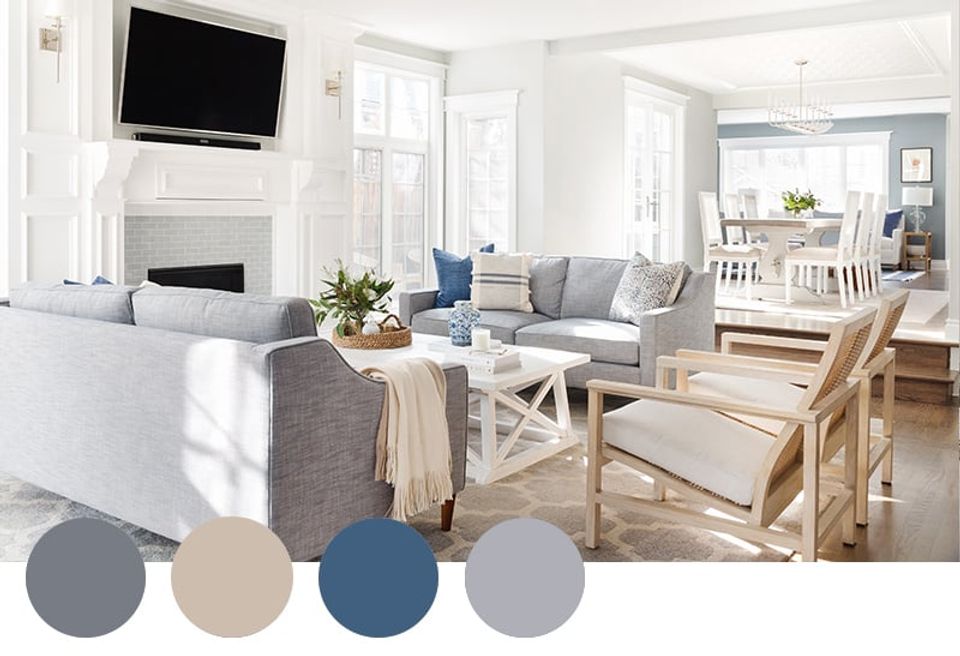
Blue is a designer favorite for a reason—it translates across coastal, classic, and farmhouse aesthetics and lends a calming feel to any space. The soft, almost neutral blues in this palette look gorgeous paired with light oak and creamy white.
Best for: bedrooms, sunrooms, any space that gets strong morning light.
10. Palm Springs modern
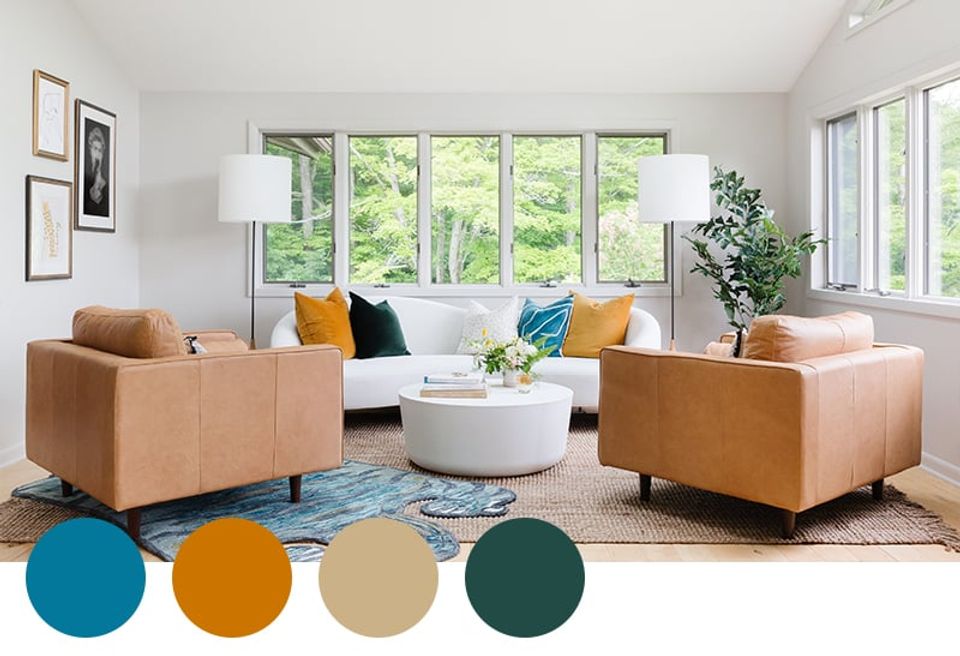
A punchy, almost tropical palette: citrine orange, ocean blue, and palm tree green. Pair with a crisp white sofa, lush greenery, and floor-to-ceiling windows, if you've got them.
Best for: sunny living rooms, pool houses, anywhere you want the energy turned up.
11. Sweet pastels
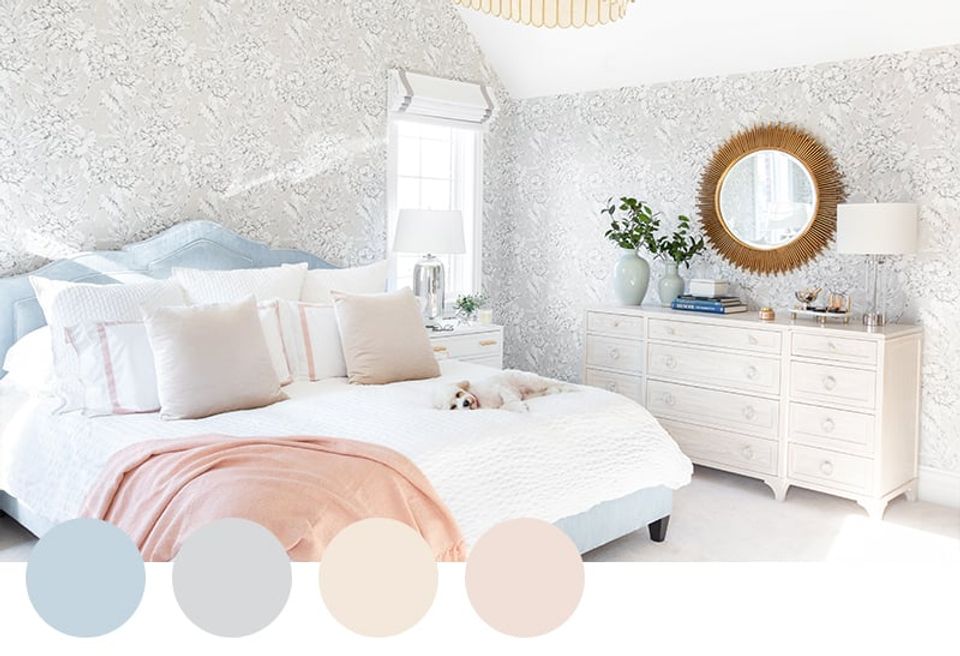
For a guest bedroom or kids' room, you can't beat soft pastels. Pink and blue is the foolproof combo, but don't sleep on a mix of pastel green, pale yellow, light gray, and dusty lavender. These hues are timeless for a reason—they're calming, light-filled, and forgiving.
Best for: nurseries, kids' rooms, guest rooms.
12. Rich jewel tones
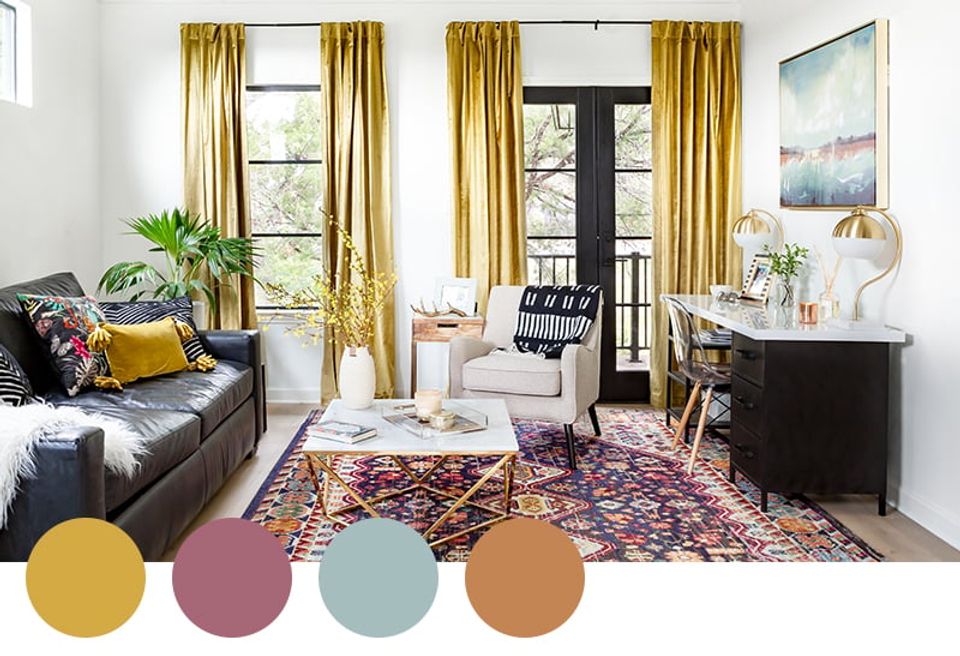
A foolproof designer combo: a neutral base with jewel-toned pops of color. Canary citrine, sapphire, aquamarine, ruby, orange topaz. When in doubt, start with a jewel-toned rug you love and build the palette out from there.
Best for: dining rooms, formal living rooms, libraries.
13. Forest-inspired
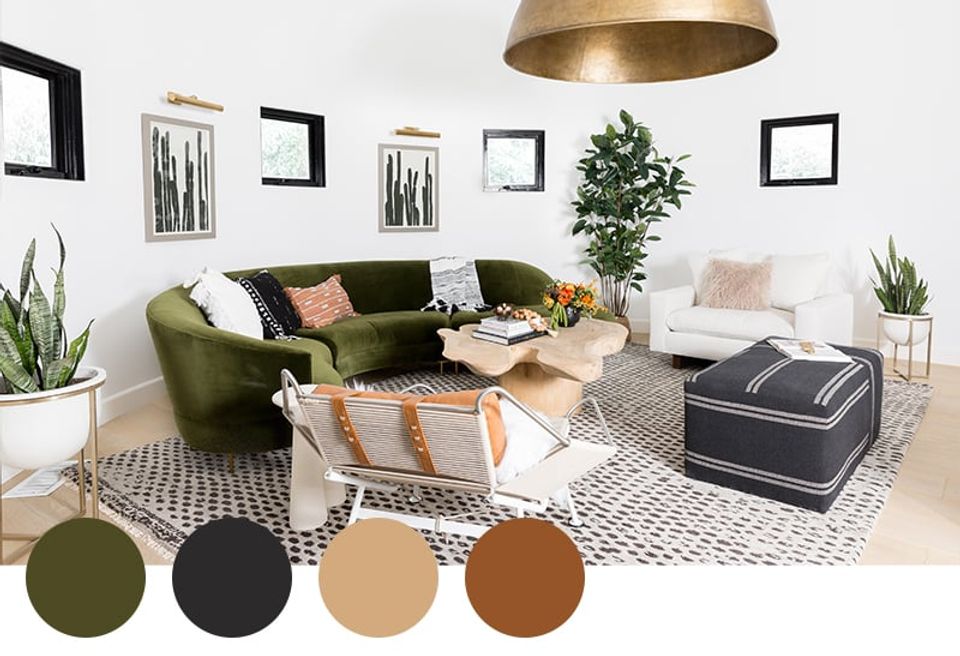
Consider cool earth tones that borrow from a thick forest palette. Deep olive green, moody black, earthy brown, and rich tan create a bold-but-balanced aesthetic that can handle graphic patterns and gold hardware without feeling busy.
Best for: home offices, dens, libraries.
14. High-contrast neutrals
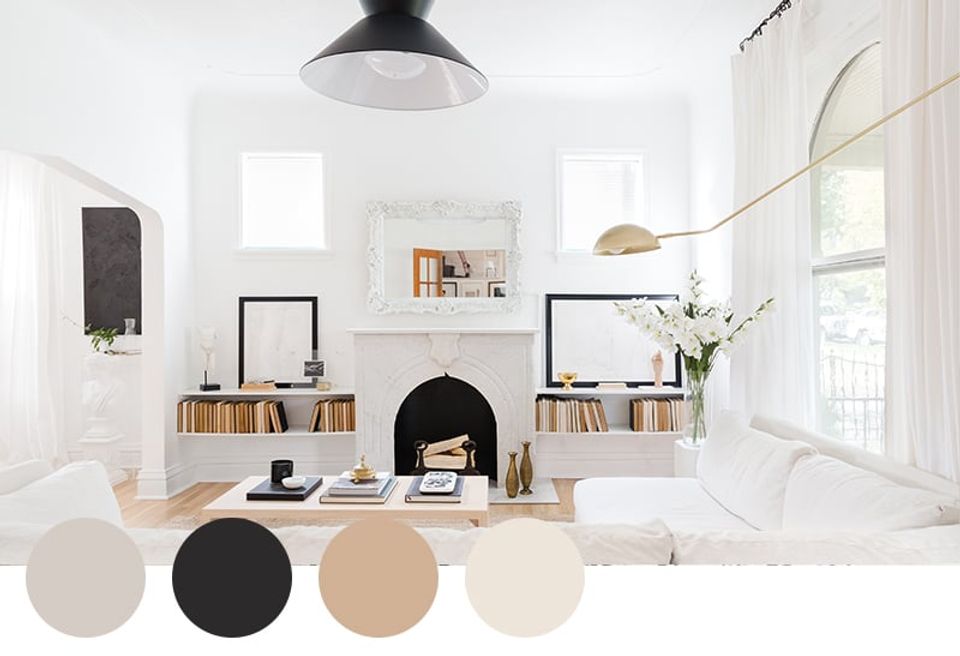
For true minimalists with a modern edge, this palette is unbeatable. High-contrast black and ivory create a bold, graphic edge, while muted gray and warm tan soften it.
Best for: modern lofts, contemporary new-builds, anyone whose aesthetic is "less but better."
15. Coastal neutrals
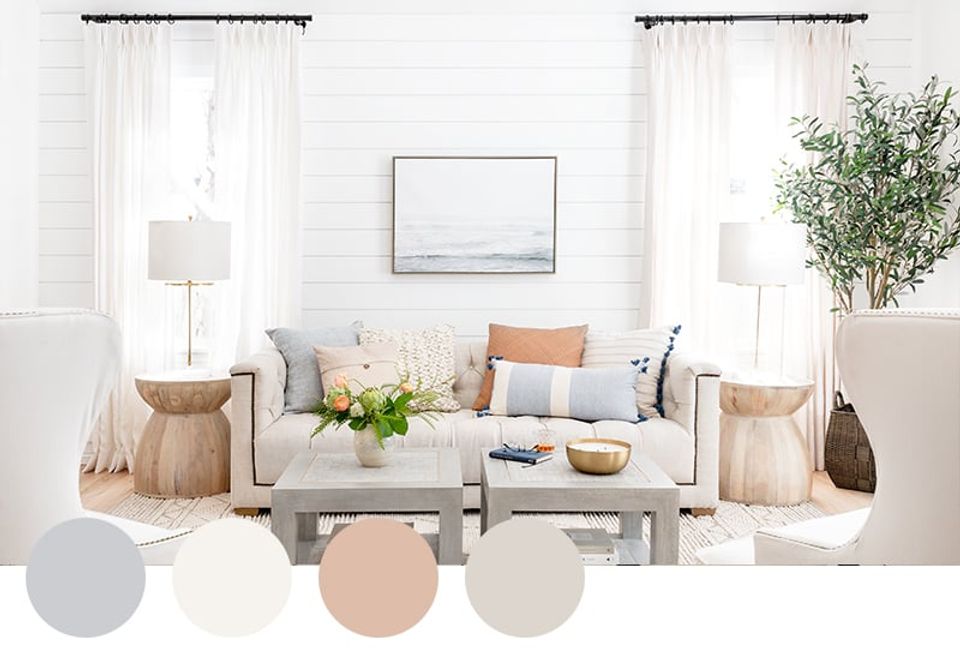
Where Palm Springs modern is bright and playful, coastal neutrals are laid-back and traditional. Barely-there blues, grays, sands, and whites channel the effortless style of life on the Pacific coast—without leaning into anything kitschy.
Best for: any home where you want the feeling of vacation, year-round.
16. Eclectic boho
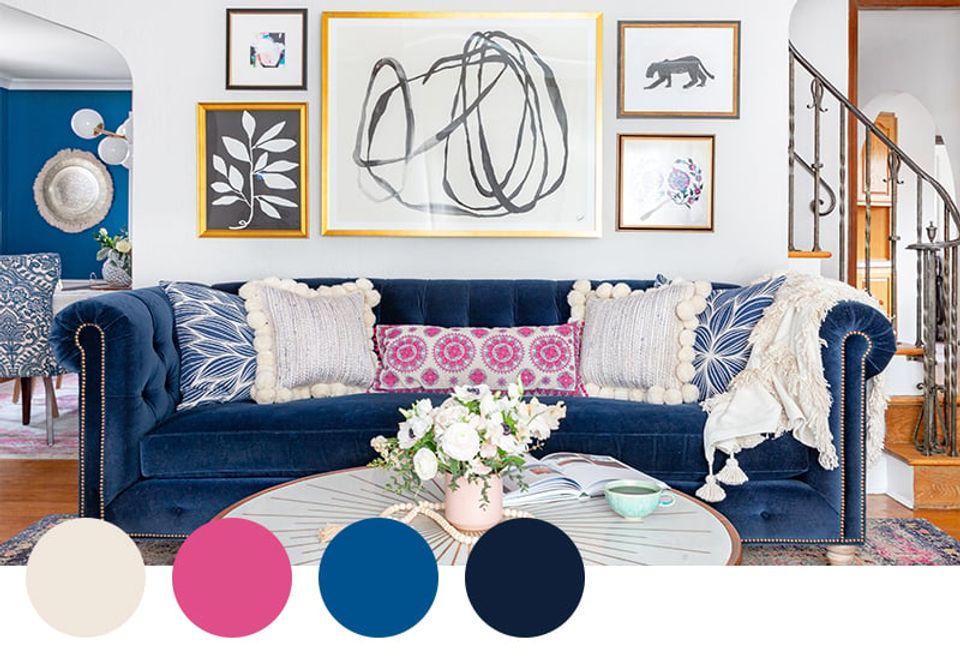
Layered teals, blues, blacks, and a well-placed pop of fuchsia feels quintessentially bohemian, especially with a hint of gold hardware. This is a bold, complementary palette that works best when you're adding personality to an otherwise neutral backdrop.
Best for: bedrooms, reading nooks, any room that needs more character.
How to pick the right palette for your home
Sixteen palettes is a lot. To narrow down the options, ask yourself three questions:
1. How do you want the room to feel? This is the most important question and the one people skip. Calming and quiet? Energetic and bright? Moody and grounded? Romantic? Crisp? Once you have an answer, half the palettes above are off the table.
2. What kind of light does the room get? North-facing rooms get cool, even light all day. South-facing rooms get warm light. East-facing get morning sun, while west-facing get afternoon. Warm palettes (terracotta, ochre, cognac) shine in north-facing rooms because they push back against the cool light. Cool palettes (sage, blue, gray) look beautiful in south-facing rooms that already have warmth. A palette that looks gorgeous in one room can read off in another simply because of the light.
3. What's already in the room? If you have an emerald velvet sofa, you don't need to plan a palette from scratch—your dominant color is already decided. Same with an heirloom rug, an art piece you love, or your favorite curtains. Build the palette around what's already there. Trying to fight existing pieces is the fastest way to a room that feels disjointed.
Want a palette built around your actual space?
Picking a palette from a list is one thing. Picking one that works with your existing furniture, your floors, the light in your living room, and your budget is another. That's where a Havenly designer comes in.
Take the Havenly style quiz—it takes 10 minutes and matches you with a designer who'll build you a complete room plan with a palette tailored to your space.
Not ready to commit? Try Havenly AI—snap a photo of your room and see it reimagined in any of the palettes above.
Frequently asked questions
How many colors should be in a home color palette?
Three to five is the sweet spot. Most well-designed rooms follow a 60-30-10 rule: 60 percent neutral base, 30 percent dominant color, 10 percent accent. More than five colors and the room starts to feel busy; fewer than three and it can feel under-decorated.
Should every room in my house use the same color palette?
Not the same, but related. The best whole-home palettes share a temperature (all warm or all cool) and pull from a similar family, so the rooms feel connected as you move through the house. You can absolutely use different dominant colors in each room—just keep the neutrals, undertones, and wood tones consistent.
How do I pick a color palette that won't look dated in five years?
Build your palette around timeless neutrals—warm whites, soft grays, natural wood—and use trend colors only in places that are easy to swap. Pillows, throws, art, and accessories can lean trendy without locking you in. Walls, large furniture, and rugs should lean classic.
Does the light in my room affect what palette will work?
Significantly. North-facing rooms have cool light and look best with warm palettes. South-facing rooms have warm light and can handle cooler tones. East-facing rooms get morning light and work with most palettes; west-facing rooms get strong afternoon light and benefit from cooler, calmer palettes. Always test paint samples in your actual light before committing.
What's a good neutral palette that doesn't feel boring?
The "airy neutrals" palette (number 10 above) is the gold standard. Layering taupe, ivory, white, beige, and soft sage creates a neutral room that still has depth and warmth—especially when you add texture through materials like linen, wool, jute, and wood. The key to a non-boring neutral palette is texture, not color.
Can I mix two palettes from this list in one home?
Yes, if they share a temperature. You could combine "airy neutrals" (number 10) with "warm earth tones" (number 1) in the same home easily—they're both warm and grounded. Combining "Palm Springs modern" with "moody neutral" would be harder because the temperatures and energy levels are so different.
Related reading
- 35 Designer-Curated Earth Tone Color Palettes
- How to Mix Wood Tones Like an Interior Designer
- The Best Sage Green Paint Colors
- How to Find Your Interior Design Style
This story was originally published on March 10, 2025. It was updated on May 22, 2026.